A community can have an active token market and still leave its members unsure whom to trust. In an essay published on November 11, 2026, at 10:31 a.m. (UTC+8), independent researcher hitesh.eth argued that crypto needs better ways to make commitments credible—not simply more things to trade. The essay was translated by 深潮 TechFlow.
The concern is social as much as technical: if repeated losses make an open system feel unsafe, people may accept surveillance, restricted access or custodial control in exchange for predictability. But hitesh.eth cautioned against treating every regulated product as authoritarian or every permissionless token as liberating. The more revealing questions are who can change the rules, freeze assets, observe participants, deny entry or prevent exit.
Privacy without blind trust
The essay draws on cypherpunk writing to frame a difficult balance. Timothy C. May envisioned pseudonymous exchange but also recognized the importance of reputation and the possibility of abuse. Eric Hughes described privacy as the power to reveal oneself selectively. David Chaum’s work suggested that credentials need not expose a single identity everywhere, while Wei Dai’s b-money proposal connected pseudonymous agreements to collateral and arbitration. Hitesh.eth presents these as influences on a design proposal, not as proof that its problems have already been solved.
The proposal also borrows from Elinor Ostrom’s work on polycentric governance. Rather than assigning everyone one global reputation score, a repair group, music collective or software team could set rules suited to its own work. Members might carry relevant evidence of performance between groups without making every part of their lives public. A record of good coding, for example, would not by itself qualify someone to arbitrate a repair dispute.
A market for commitments, not just tokens
Hitesh.eth calls the proposed model “Human Commitment Markets.” People would agree on useful work before it begins, fund payment, define evidence of completion and specify what happens if an agreement fails. Tokens, if used, would follow the underlying service obligation rather than substitute for it.
In the essay’s illustrative repair job, a customer places 100 units of payment in escrow and a technician posts a 20-unit performance deposit. Both parties agree in advance on the deadline, quality standard, evidence, dispute route and maximum penalty. Successful acceptance releases the payment and returns the deposit. If the technician never starts and misses the deadline, the customer receives a refund and the agreed compensation from the deposit. A contested repair instead goes to an independent assessor, who may need to inspect the physical equipment. The contract can distribute escrowed funds according to the agreed process; it cannot judge the condition of a machine on its own. The amounts are examples, not proposed universal terms.
That distinction matters for community reputation, too. A complaint should not instantly become a permanent public verdict. Records of pending, resolved and expired disputes need different treatment, and evidence should remain accessible to those resolving a case without becoming an unnecessary public dossier. Hitesh.eth also warns that deposits set too high could exclude newcomers. Smaller first jobs, staged payments or guarantors could offer a path to a first credible record while limiting risk.
What the technology cannot guarantee
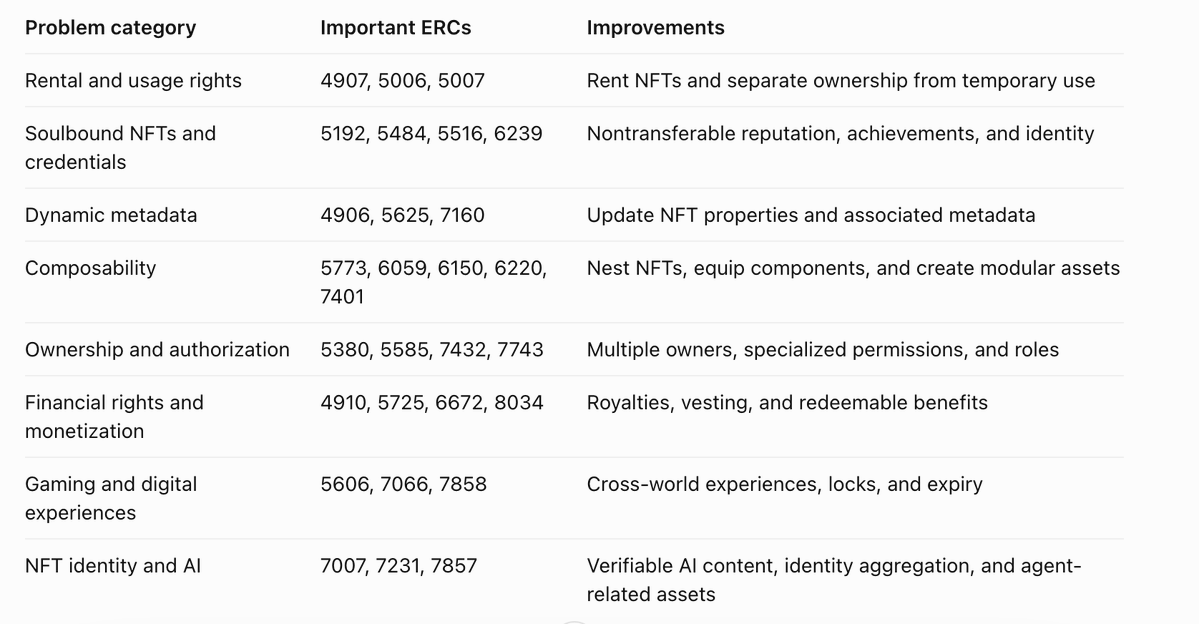
The essay surveys Ethereum components that might support parts of the design. ERC-1155 and ERC-6909 can represent different service credits, but neither proves that a provider has capacity to deliver them. ERC-5484 can support nontransferable, consent-based credentials; nontransferability does not establish skill, honesty or a unique person. ERC-5564 stealth addresses can reduce a visible link between a recipient and an incoming payment, but do not hide the amount or make public escrow private. Hitesh.eth said the cited established standards were marked Final when their official pages were checked on November 10, 2026; that status is not a security assessment of any implementation. ERC-8004, discussed as a possible framework for AI-agent identity, reputation and validation, was Draft at that check and is not itself a payment system.
The suggested first experiment is deliberately narrow: one community, one settlement asset, one kind of work, a transparent dispute process and no speculative governance token. Hitesh.eth proposes testing escrow outcomes on Sepolia, using synthetic data for privacy tests and obtaining an independent security review before a small live-money pilot. Measures of success would include completed jobs, repeat customers, dispute times, losses and privacy failures—not token price.
This is a design argument, not a report of a completed system. Its cultural proposition is that a community should be judged by whether people can contribute, resolve disagreements, protect appropriate privacy and leave without forfeiting unrelated assets. A token alone cannot supply those conditions.
Source: techflowpost.com (originally published 2026-11-11 10:31 UTC+8)