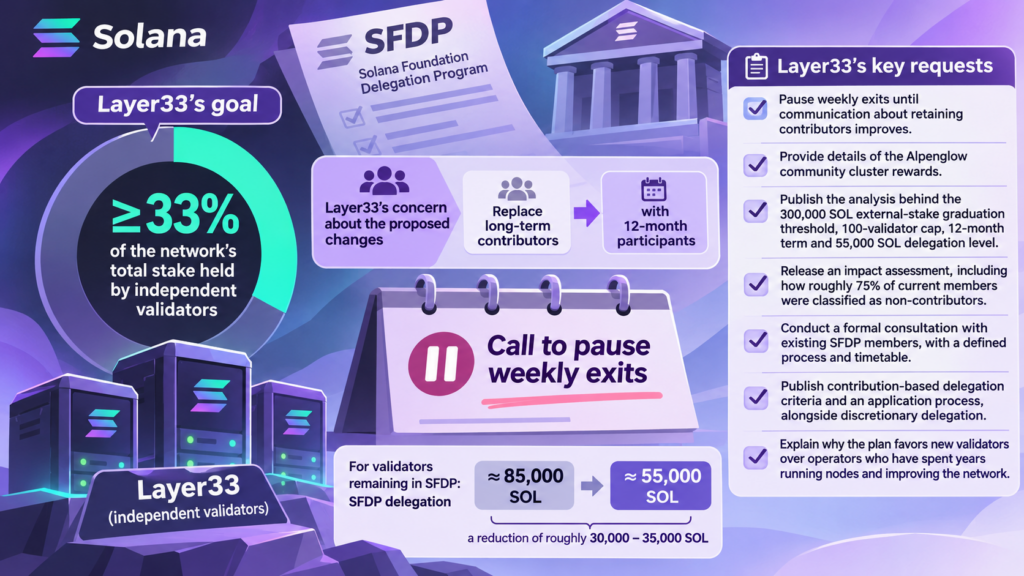
Independent Solana validator alliance Layer33 has called for a pause in weekly exits from the Solana Foundation Delegation Program (SFDP) while the foundation addresses concerns from existing participants. ChainCatcher reported the response on November 12, 2026, at 08:46:22 UTC+8.
Layer33 is made up of independent validators and aims for independent operators to hold at least 33% of the network’s total stake. The alliance said it agrees that the network has grown since SFDP began and that its delegation rules should evolve. Its objection is to the proposed sequence: it says the changes would replace long-term contributors with participants whose terms last 12 months.
According to Layer33, the foundation subsequently said participants in the Alpenglow community cluster had provided crucial help and deserved direct rewards. Layer33 argued that SFDP has more than 10 million SOL in remaining delegated stake, so rewarding those participants would not require dismantling the existing program. It also said the people the foundation wants to reward are among those being prioritized for exit.
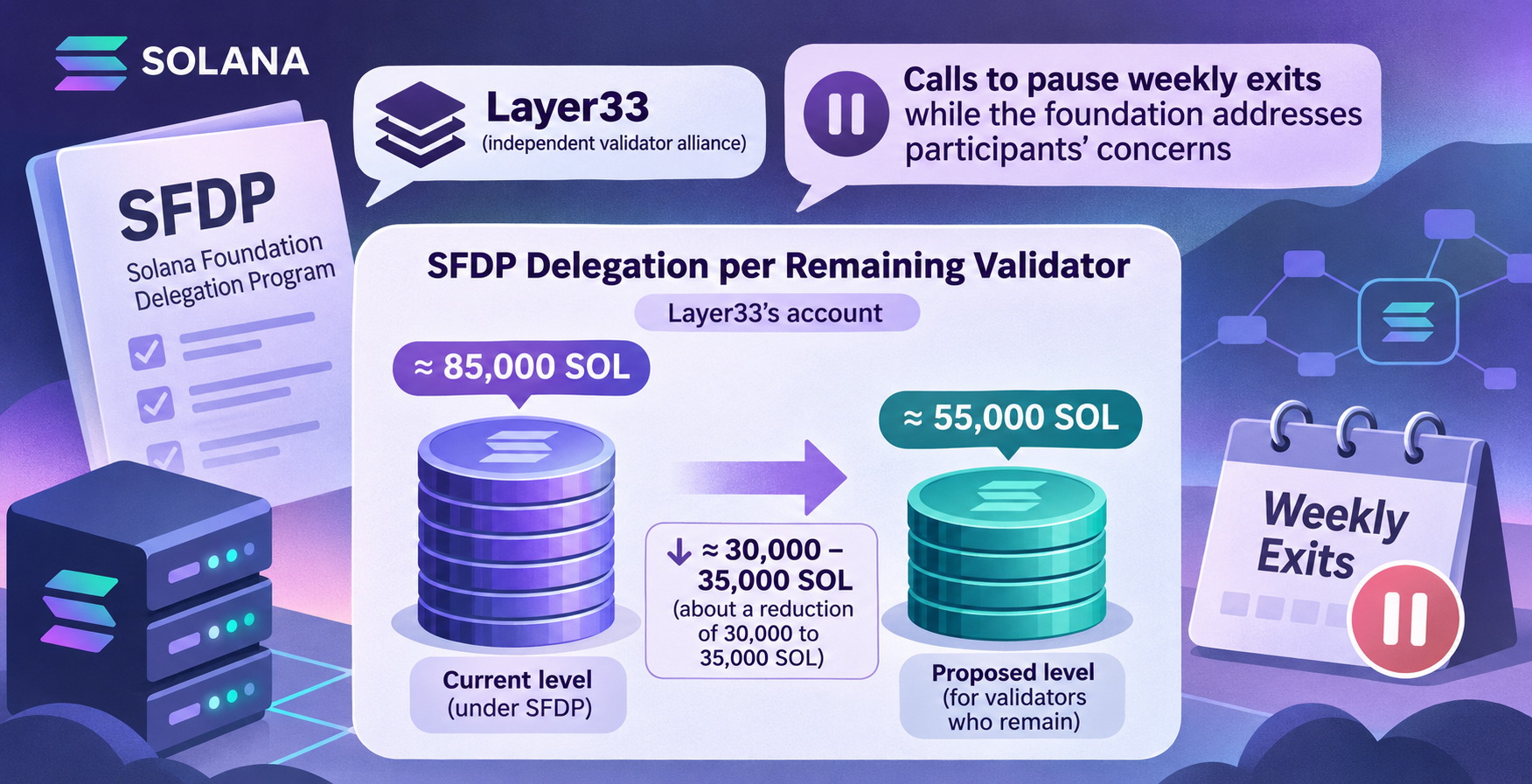
Layer33 said validators who remain in SFDP would see their delegations fall from about 85,000 SOL to 55,000 SOL—a reduction it put at roughly 30,000 to 35,000 SOL. It said some operators had already shut down nodes and canceled plans to attend Breakpoint.

The alliance said it is not asking the foundation to reverse course, but to change the order of its actions. Alongside pausing weekly exits until communication about retaining contributors improves, it requested details of the Alpenglow rewards and the analysis behind the 300,000 SOL external-stake graduation threshold, 100-validator cap, 12-month term and 55,000 SOL delegation level. It also asked for an impact assessment explaining how roughly 75% of current members were classified as non-contributors; formal consultation with existing SFDP members with a defined process and timetable; and published contribution-based delegation criteria and an application process alongside discretionary delegation. Finally, it asked why the plan favors new validators over operators who have spent years running nodes and improving the network.
Source: chaincatcher.com (originally published 2026-11-12 08:46 UTC+8)