Originally reported on August 13, 2026, at 07:57 (UTC+8). This article reflects an argument by 1confirmation, translated in the source by Chopper for Foresight News—not a claim that any of these ideas will succeed.
Crypto’s next consumer hit might come from an idea that failed the first time around. That is 1confirmation’s thesis: infrastructure and user habits can change, so an unsuccessful product does not necessarily settle whether its underlying idea has value. The firm points to five earlier approaches worth reconsidering.
Owning an internet moment
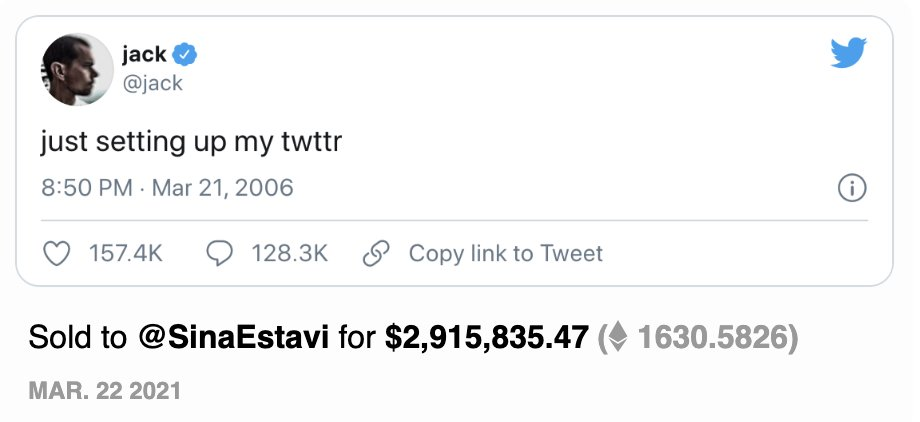
During the 2021 NFT boom, Cent built a market for tokenized tweets. Jack Dorsey’s first tweet sold on March 22, 2021, for 1,630 ETH, or $2,915,835.47. NBA Top Shot also put cultural moments on-chain, though 1confirmation argues its format resembled digital collectible cards. In the firm’s view, crypto still lacks a mature way to represent an internet moment itself: a meme coin may reflect attention around an event without anchoring that event. It suggests looking beyond the current interest in tokenizing real-world assets toward assets native to the internet.
Earning and gathering online
STEPN and Axie Infinity showed users a route to earn tokens rather than buy them. For 1confirmation, the lesson is not that every “X-to-Earn” model is doomed, but that unrestricted distribution of liquid tokens cannot sustain an economy. Its prediction that most people will earn their first cryptocurrency rather than buy it remains a prediction; what they would earn and why they would keep it are open questions.
The firm likewise sees an unfinished idea in the metaverse. Decentraland and The Sandbox tried to reproduce features of the physical world, including land and buildings, online. When Facebook renamed itself Meta, its market value had reached $900 billion, according to the source. 1confirmation argues that future shared online spaces need not imitate physical places.
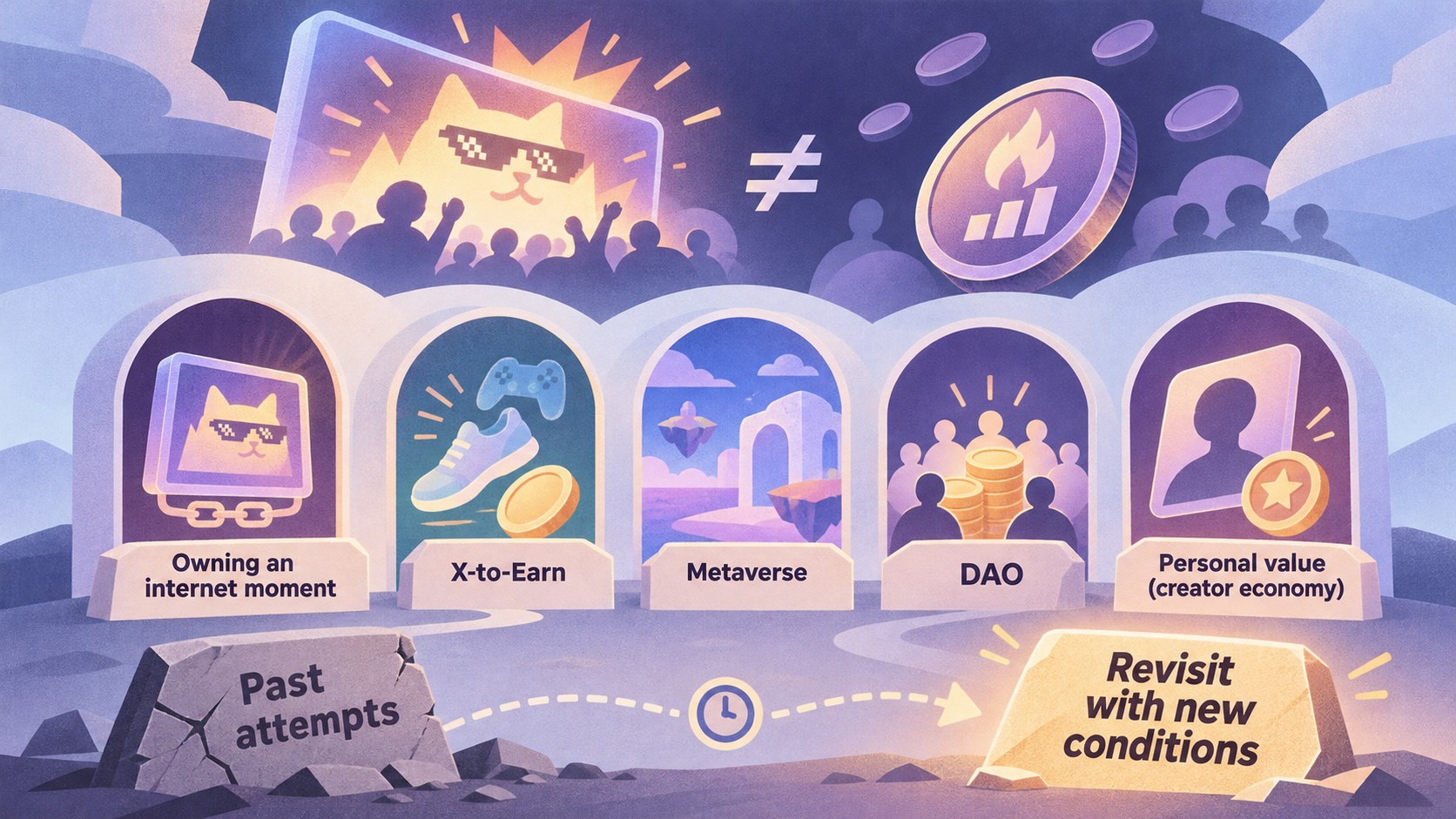
DAOs offer a more concrete example of collective participation. ConstitutionDAO raised about $47 million in a few days to try to bid for an original copy of the U.S. Constitution. Although many DAOs remain, 1confirmation says the model has fallen short of its early ambitions. Its proposed shift in emphasis is from governance mechanics to people pooling resources to do something an individual could not.

When the person becomes the product
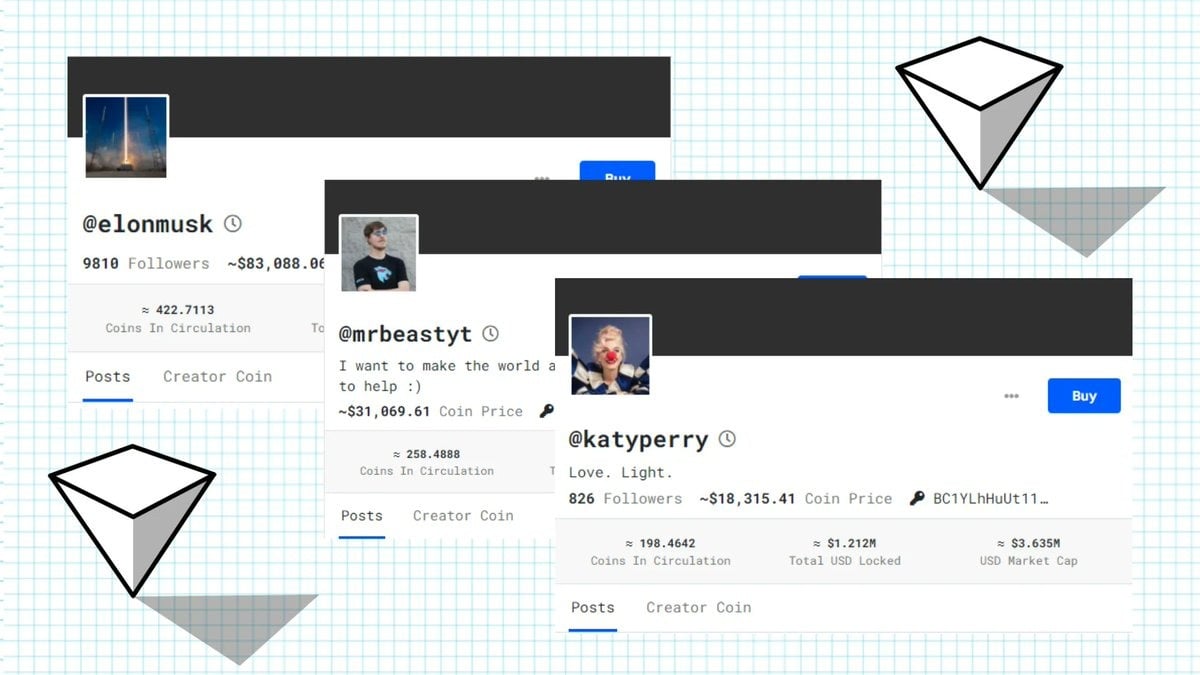
Friend.tech, Rally, Roll and BitClout tried different ways to create markets around people, from creator tokens to access passes and bonding-curve pricing. 1confirmation says none sustained its product over the long term. People already trade person-linked meme coins and athlete cards, among other things, but that leaves a cultural question unresolved: do creators want to be treated as tradable assets? The firm asks whether a market could form around someone without making the person the commodity.

These are 1confirmation’s interpretations of earlier experiments, not evidence that a revival is imminent. Their common thread is less a specific token design than a question about what people want to own, earn and do together online.
Source: panewslab.com (originally published 2026-08-13 07:57 UTC+8)