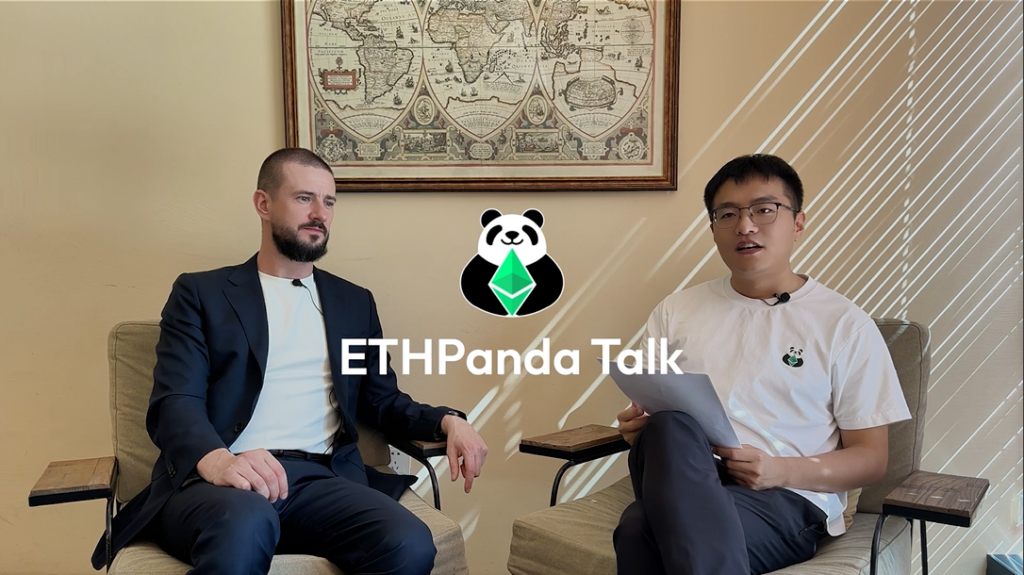
Originally reported by ETHPanda Talk on December 29, 2025, at 10:55 a.m. UTC+8.
Tomasz Stanczak’s route into Ethereum core development began with curiosity about how the network worked. In an ETHPanda Talk interview, the Nethermind founder and Ethereum Foundation (EF) co-executive director said he started implementing ideas from Ethereum’s yellow paper before he had even made contact with other core developers. He later realized that reaching them could have been as simple as sending an email or a tweet.
That experience shaped a recurring theme of the conversation: open-source work may be permissionless, but people still need ways to find one another. Stanczak credited Antonio Sabado, now Nethermind’s chief growth officer, with encouraging him to join London’s blockchain community, run EVM workshops and apply for an EF grant. Stanczak said the company received $50,000 from an early EF grant program roughly a year to a year and a half after its founding, around the time he made his first formal hire.
Getting L2 builders into the same room
Stanczak described a similar social challenge in Ethereum’s layer-2 ecosystem. Beyond the technical problems of secure, permissionless bridging and consistent wallet experiences, he said, teams need to coordinate across projects. He suggested that commercial priorities can make some L2 operators less willing to cooperate, even when engineers want to solve shared problems.
At the time of the interview, he said EF was proposing a dedicated gathering for L2 engineers and researchers the following year. It was a plan, not an event the source says had taken place. The idea followed feedback from L2 engineers who, he said, rarely had opportunities to meet one another in person.
Support beyond grants
Stanczak also said EF had shifted away from grants that simply provide money without requiring an output, placing more emphasis on introductions, visibility and coordination. He described work with physical community spaces and a planned Hong Kong community hub, alongside cooperation with Hong Kong Polytechnic University. The intended role, in his account, was to help local groups connect while leaving communities room to develop independently.
The interview also explored AI agents. Stanczak saw possible uses for Ethereum-related agent standards and governance tools, but his view that AI agents could become a major direction for the ecosystem was a prediction, not an established outcome. Across those topics, the clearest documented thread was less about a new narrative than about participation: who can enter the work, meet peers and help shape what gets built.
Source: panewslab.com (originally published 2025-12-29 10:55 UTC+8)