Crypto cards are being used more often, but the balances left in their apps may say as much about users’ priorities as the purchases themselves. In an analysis published on November 24, 2026, DWF Ventures reported that users spent only $0.65–$0.75 for every $1 deposited, on average. The firm argued that saving and earning yield have become important alongside everyday payments.
Spending is growing—and concentrated
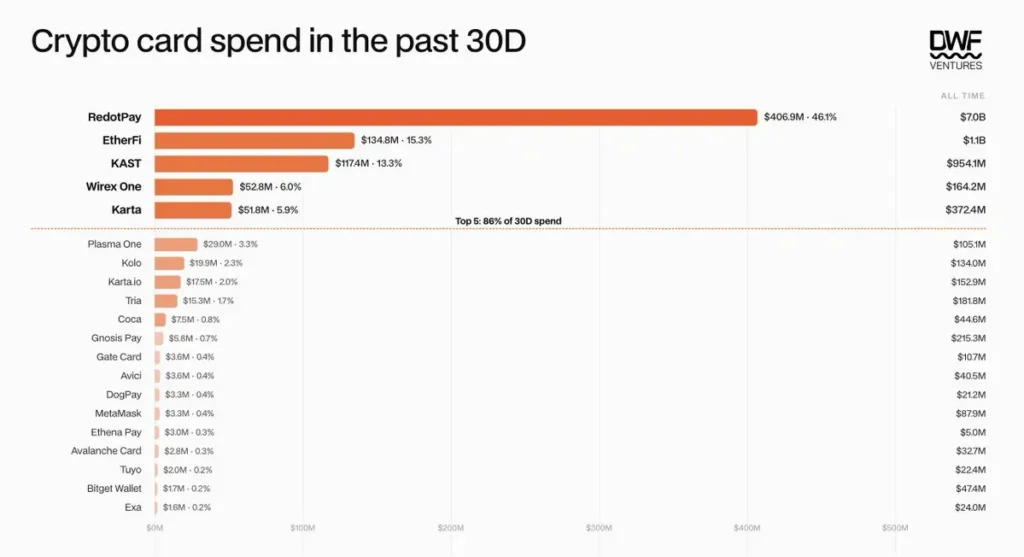
Weekly crypto card spending exceeded $300 million, up nearly 200% year over year, according to the analysis. But among the 20 largest card projects, the top five accounted for 86% of spending over the preceding 30 days. RedotPay alone represented more than 46% of volume. DWF Ventures based those figures on information available through PaymentScan and noted that metrics for some other card projects were not public.
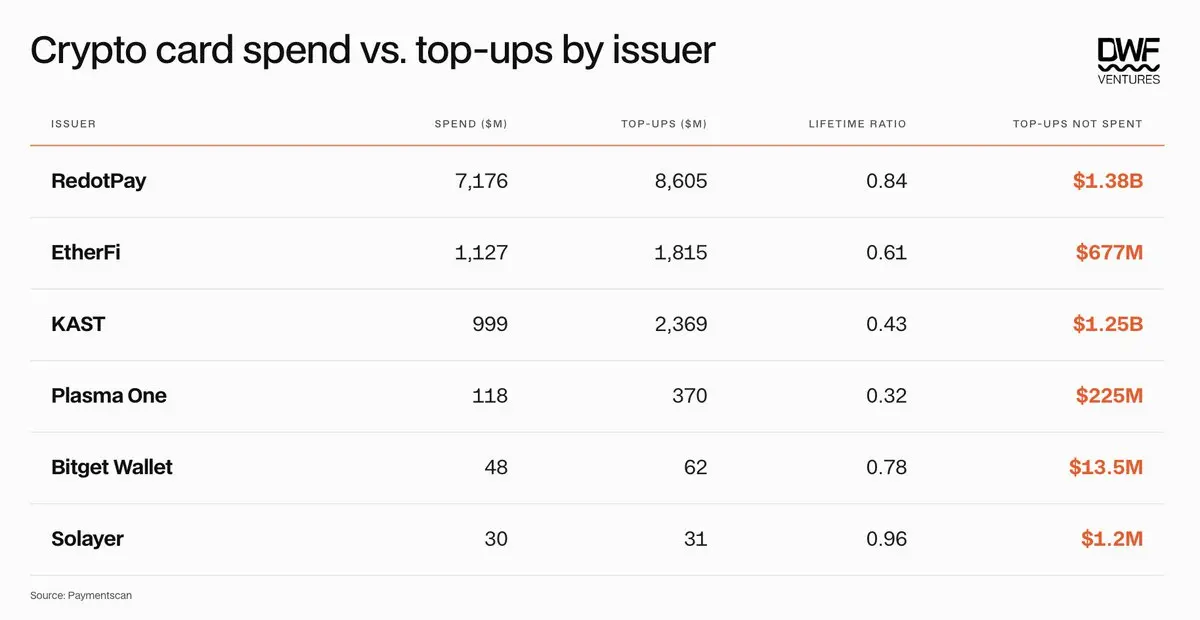
The report suggested that trust, brand and distribution matter alongside card features. It pointed to EtherFi and KAST as projects with relatively low spending compared with deposits; both offered 7–9% APY on dollar-stablecoin deposits at the time of the analysis. That pattern supports the report’s view that some users treat these apps as places to hold money, not just spend it.
Rewards have a cost
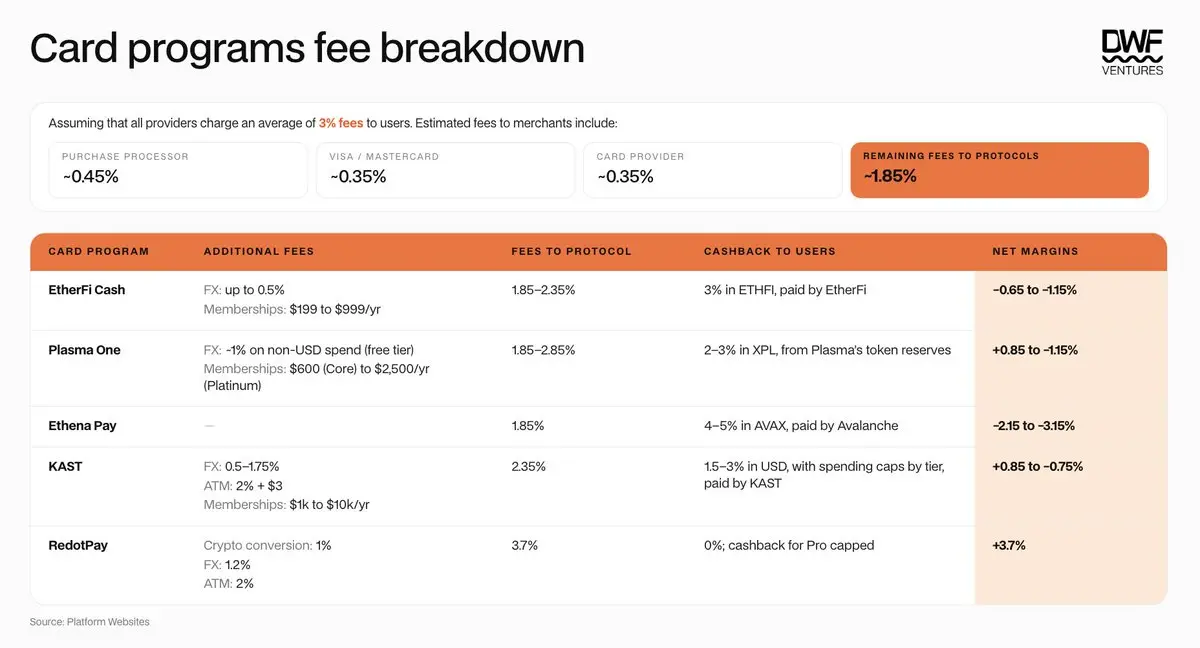
DWF Ventures identified interchange, foreign-exchange and crypto-conversion fees, and fees for converting crypto into local currency as card-project revenue sources. It said profitability remained uncertain because cashback returns a substantial share of revenue to users. After cashback, most projects retained less than 1% of card spending in revenue, while rewards could cost as much as 2–3% of spending, according to the report.
The analysis contrasted rewards-led competition with RedotPay’s emphasis on reach. It said RedotPay held licenses in Hong Kong, the United States, Canada and Argentina, and supported payments in more than 35 currencies through local partners. DWF Ventures also argued that local payment access and multi-currency settlement could matter more than another cashback offer: most card spending settled in dollars, leaving users who spent in other currencies facing foreign-exchange fees of 0.5–2%.

From cards toward broader apps
The report described several ways providers were testing services beyond spending. It said KAST had issued a stablecoin through M0 and EtherFi had launched ether.fi USD through Ethena. As an illustration of potential revenue—not a reported result—it estimated that EtherFi’s roughly $48 million in idle user deposits could generate about $2 million annually at a 4% yield.
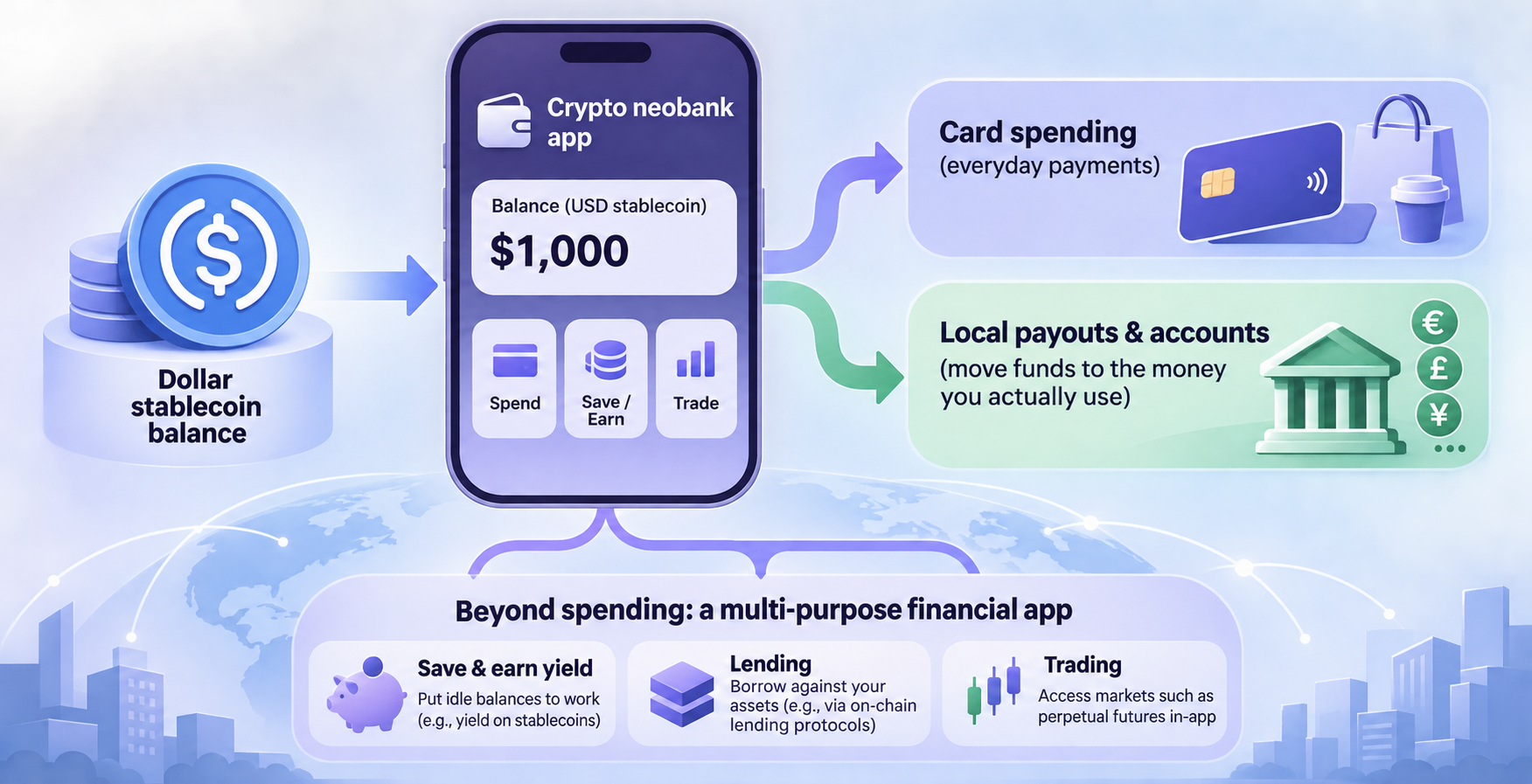
It also cited more than $47 million in loans through ether.fi Cash’s Aave V4 instance. Separately, it said Phantom had added perpetual trading through Hyperliquid and earned more than $20 million in builder fees since that feature launched.
Those examples point to different attempts to make one app useful for spending, saving and trading. Whether they produce durable businesses is less clear. DWF Ventures’ central argument was that earning users’ trust and connecting balances to the local accounts and currencies people actually use would be harder—and potentially more distinguishing—than issuing another card.