As of reporting published on November 23, 2026, South Korean wallet provider DCENT was already telling people who kept a wallet only on a phone to move their coins. Yonhap News Agency reported on November 22, 2026, that operator IoTrust was phasing out the App Wallet after a September security incident in which users said Bitcoin, Ethereum, XRP, and other assets had been transferred without their authorization.
The wind-down is narrow. It covers wallets created and used entirely on a smartphone. DCENT’s hardware wallets, and the app functions used to connect them, were to remain available. Yonhap’s report did not give a final shutdown date.
A phone phrase and a hardware key are not the same habit
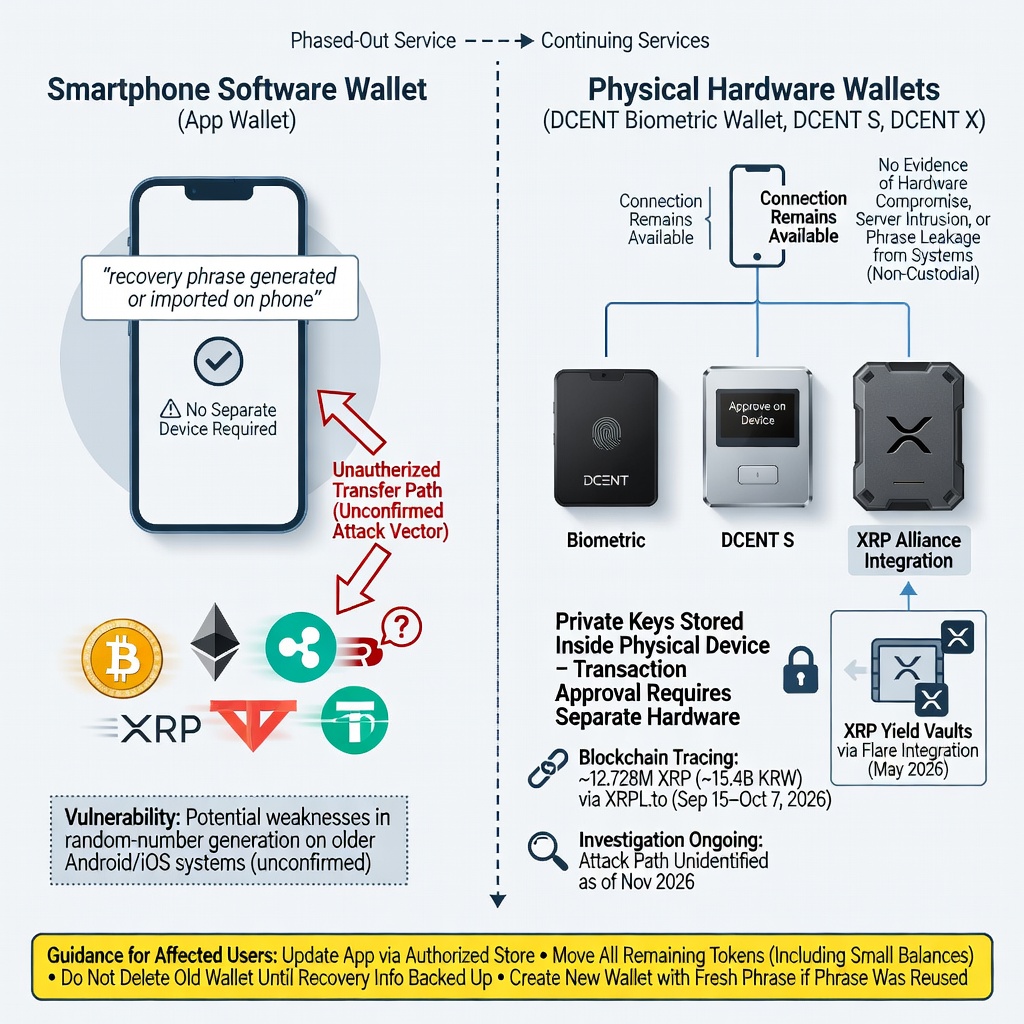
DCENT’s mobile app has offered two ways to hold cryptocurrency. With the software App Wallet, a customer generates or imports a recovery phrase on the phone and authorizes transactions without a separate device. Hardware users keep private keys inside a physical device and approve transfers on that device. IoTrust planned to discontinue the first service. Connections to the DCENT Biometric Wallet, DCENT S, and DCENT X were set to continue.
“This issue does not affect the hardware wallet devices themselves,” the DCENT team said in its November 2 notice. The company still warned that a hardware owner could be exposed if they had previously entered the same recovery phrase into the App Wallet. Importing that phrase into new hardware does not create different private keys. People in that situation were advised to create a wallet with a new recovery phrase and transfer what remained.
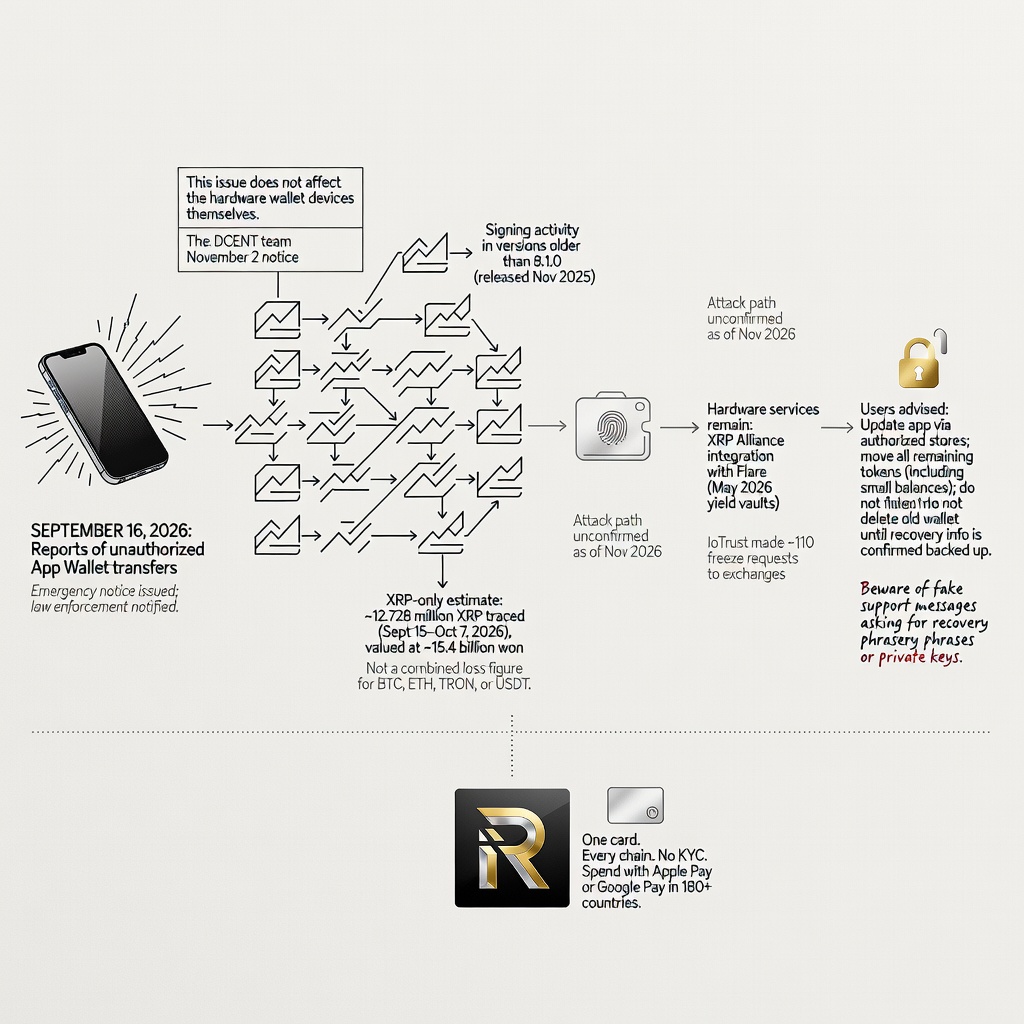
DCENT’s guidance asked affected customers to update the app through an authorized store before moving funds, to move every remaining token including small balances, and not to delete the old wallet before confirming that recovery information was backed up.
Hardware services that were continuing included an XRP Alliance integration with Flare, which in May gave device users access to XRP-denominated yield vaults.
What was reported, and what is still unproven
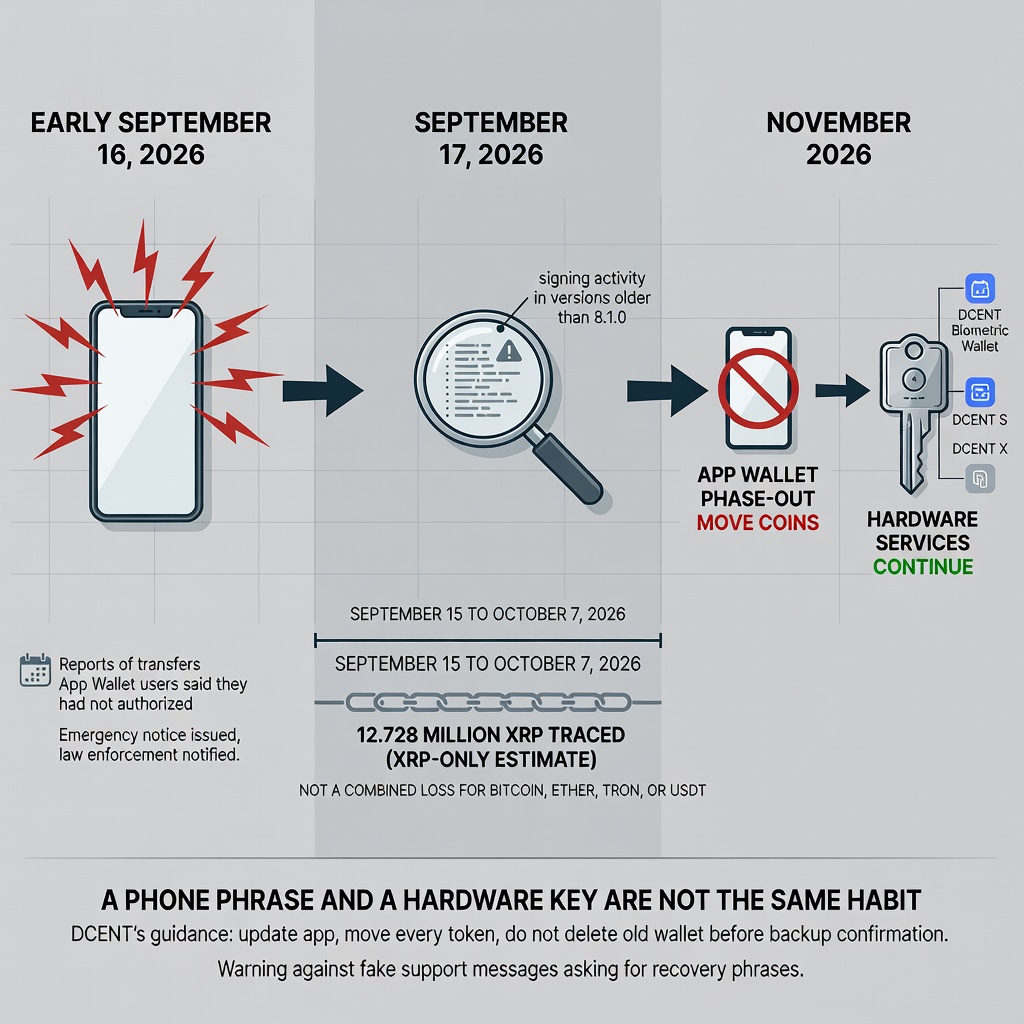
The trouble began early on September 16, 2026, when support received reports of transfers that App Wallet users said they had not authorized. IoTrust issued an emergency notice later that day, notified law enforcement, and asked exchanges to help trace suspicious transactions. Later reports involved Bitcoin, Ether, XRP, TRON, and USDT, from users inside and outside South Korea.
DCENT’s September 17 report highlighted signing activity in versions older than 8.1.0, released in November 2025, as one of several potential risk indicators. Both Android and iOS users could fall within the affected group. That note did not establish the attack path.
Blockchain analysis service XRPL.to traced approximately 12.728 million XRP taken between September 15 and October 7, 2026, according to Yonhap, which valued those tokens at roughly 15.4 billion won. The estimate covers XRP only. It does not establish a combined loss for every affected cryptocurrency. IoTrust had not established the precise attack method or the total financial damage.
An October investigation, previously reported by crypto.news, linked funds associated with the DCENT incident to suspected illicit flows through the FreedomXMR service. Those findings concern how suspected stolen assets moved. They are not proof of the vulnerability that allowed the initial transfers.
More than two months after the first reports, the exact attack path was still unidentified. Yonhap said IoTrust was examining whether weaknesses in random-number generation on older Android and iOS systems had played a role. That remained an unconfirmed possibility.
In its November update, DCENT said it had found no evidence of compromised hardware devices, tampered application builds, intrusion into company servers, or direct leakage of customer recovery phrases from its systems. The company does not store those phrases, because the wallets are non-custodial. It had provided technical material to the Korea Internet & Security Agency and was cooperating with investigators.
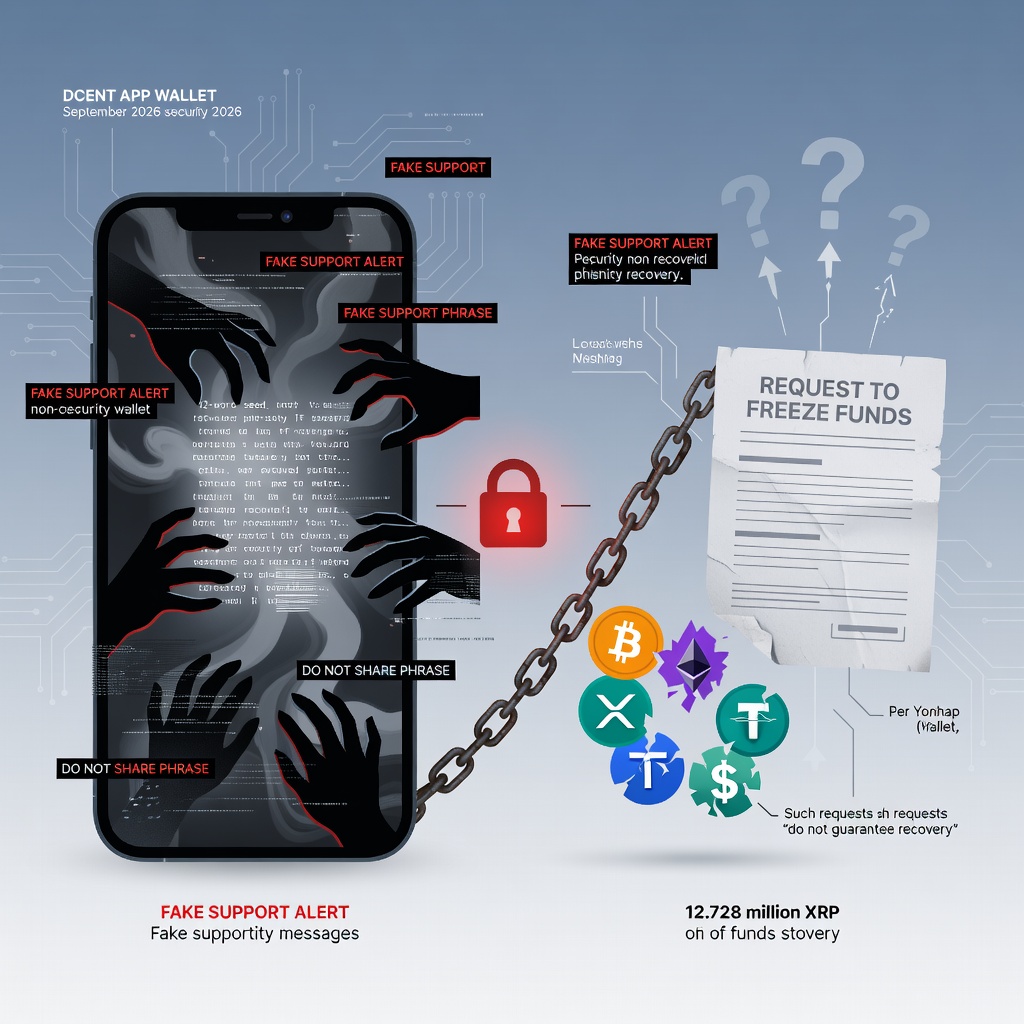
According to Yonhap, IoTrust had made around 110 requests to freeze suspected stolen funds through exchanges and cryptocurrency swapping services. Requests do not guarantee recovery.
Complaints, a cautious lawsuit, and messages asking for the phrase
Some South Korean customers filed criminal complaints against IoTrust in mid-October 2026, while about 20 others were seeking legal advice about acting together. A lawyer representing victims with combined alleged losses exceeding 1 billion won told Yonhap that the cases had been transferred to the National Police Agency’s Cyber Terrorism Investigation Unit. Those figures were alleged losses in the matters the lawyer described, not a company-confirmed total.
The lawyer said determining responsibility would require distinguishing technical problems attributable to the wallet operator from problems arising while users managed recovery phrases. “Because it is difficult to prove that the operator’s fault was the sole cause, we are approaching the civil lawsuit cautiously,” the lawyer said, according to Yonhap.
As of the November 22, 2026 report, IoTrust had not announced a compensation arrangement. It warned users against fake support and reimbursement offers, particularly messages asking for recovery phrases or private keys.
That warning is the practical core of a non-custodial phone wallet. The phrase is the access, and DCENT says it does not keep a copy. The company’s November update says it found no evidence those phrases leaked from its systems. The lawyer’s caution, reported by Yonhap, is that a civil case may also have to weigh how users handled the same phrases. Neither statement identifies who moved the coins.