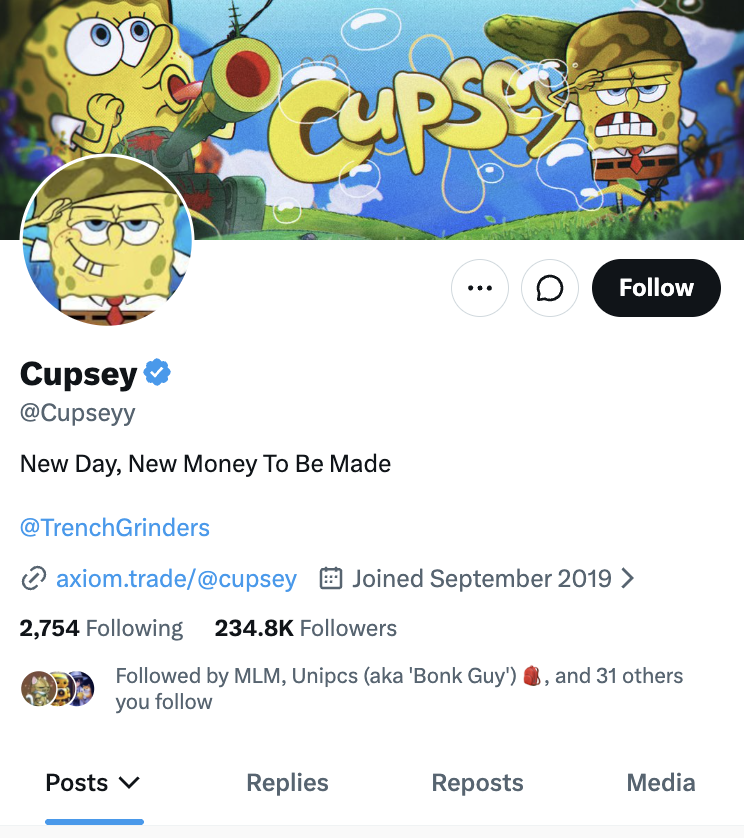
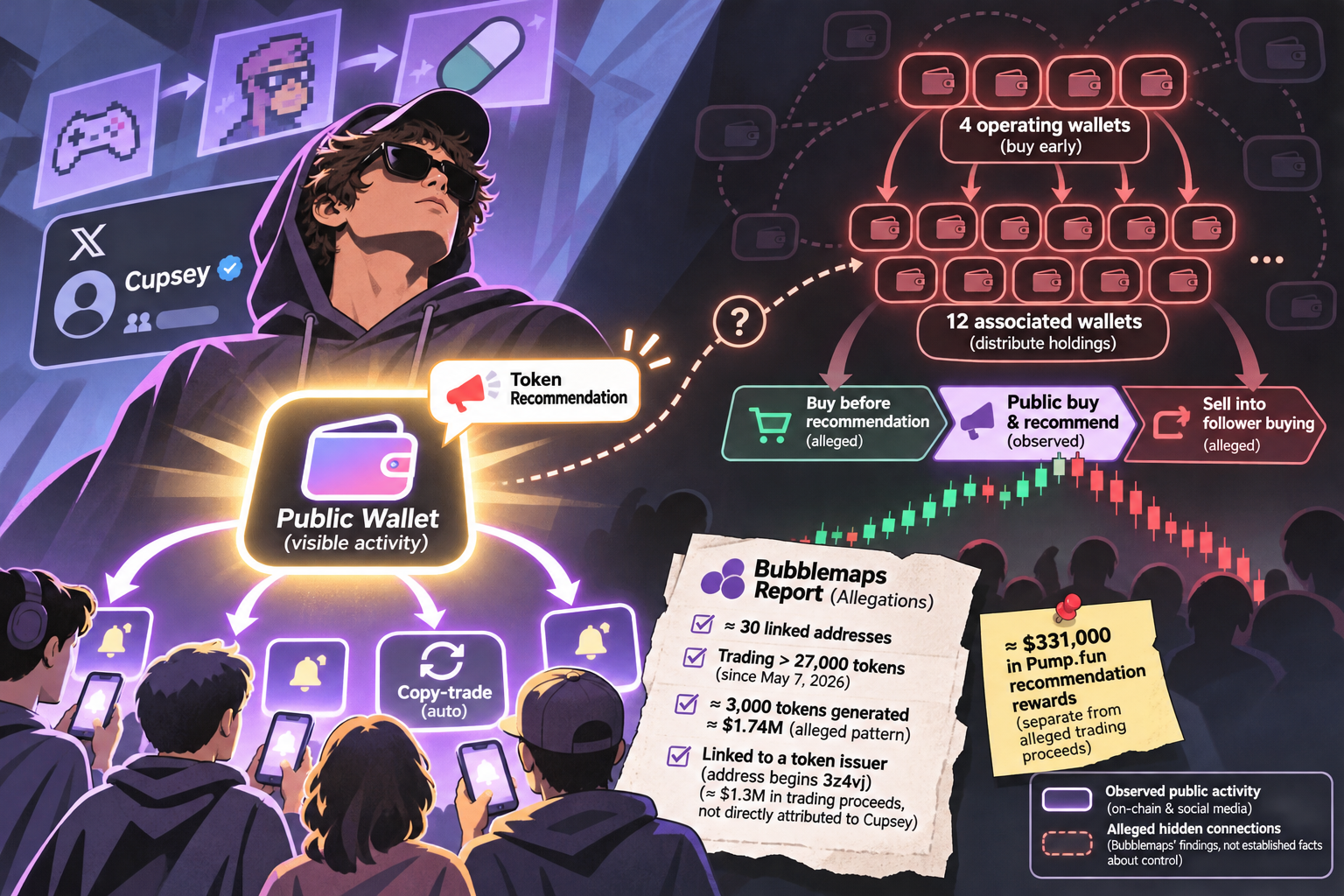
A public wallet can become a kind of social identity in meme-coin trading: followers watch its buys, receive alerts and, in some cases, use tools that copy trades automatically. That visibility helped make Solana trader Cupsey’s wallet a closely followed signal. On November 10, 2026, blockchain analytics firm Bubblemaps alleged that other wallets linked to Cupsey were trading out of view of those followers.
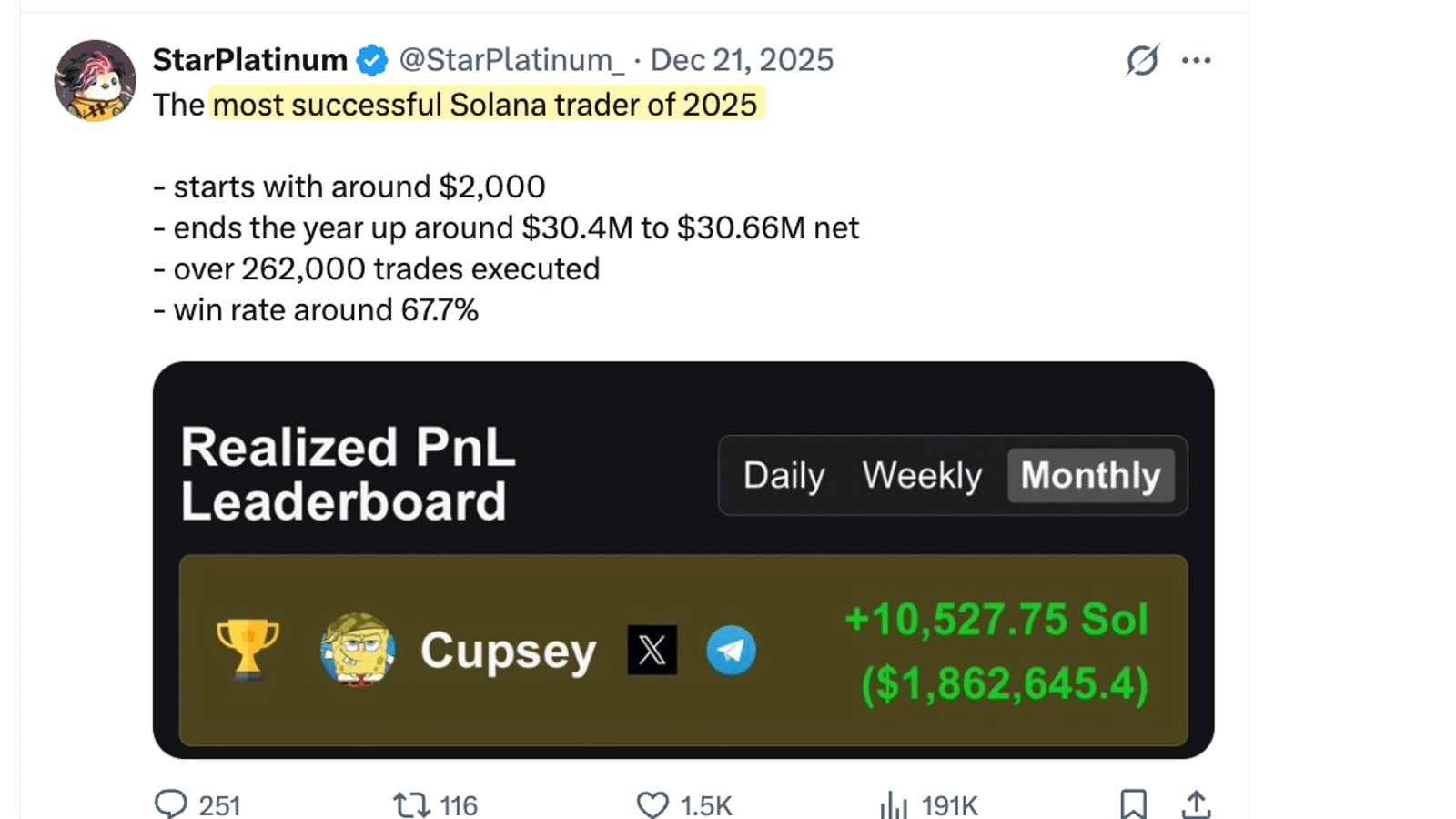
Cupsey had more than 230,000 followers on X at the time of the report. His path into crypto included Solana NFTs and the DeGods community before he moved into Pump.fun meme-coin trading in 2024. The distinction between his visible wallet and any privately controlled addresses is central to the allegations—not something a public trade alert can settle on its own.
What Bubblemaps says it found
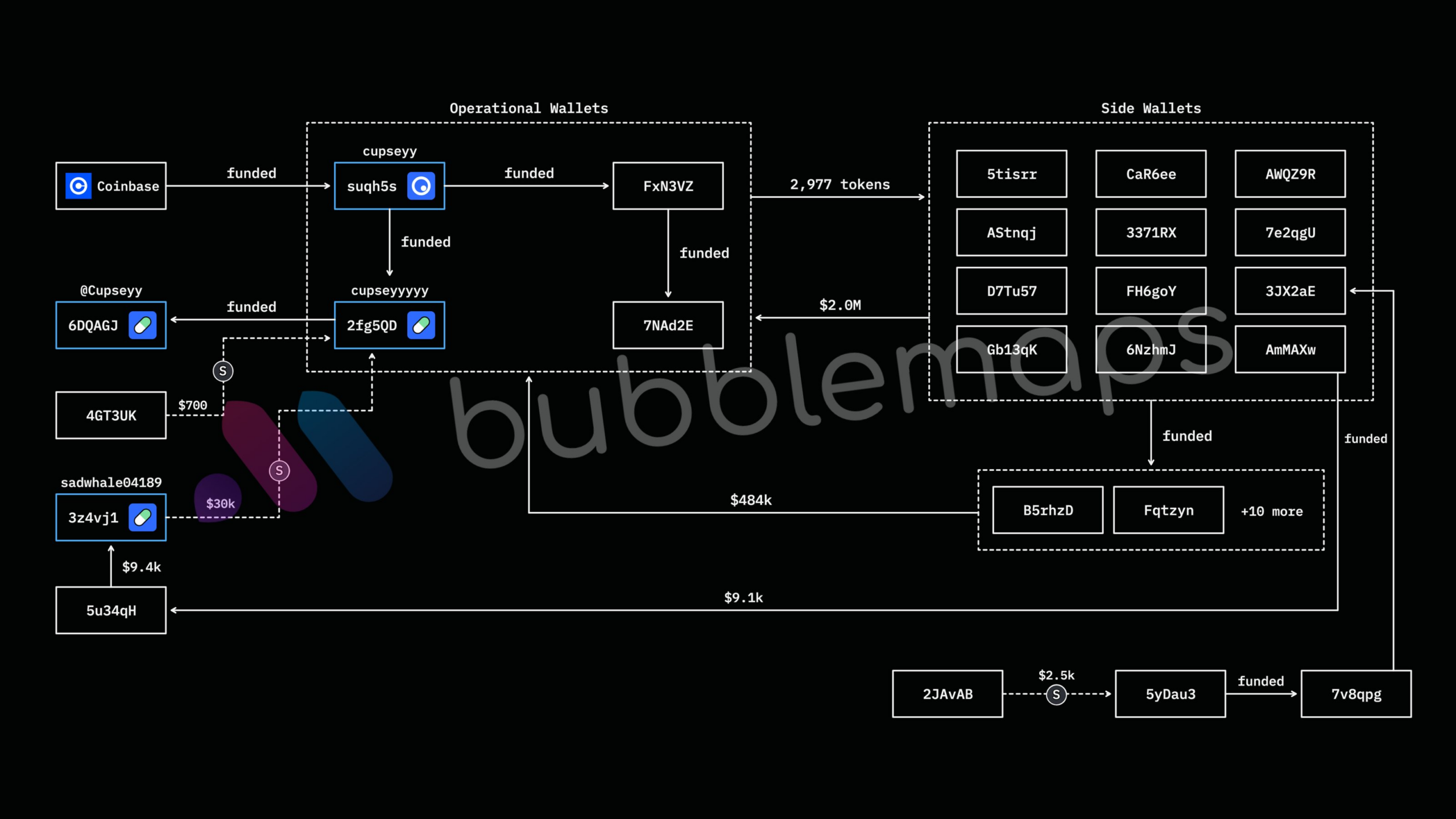
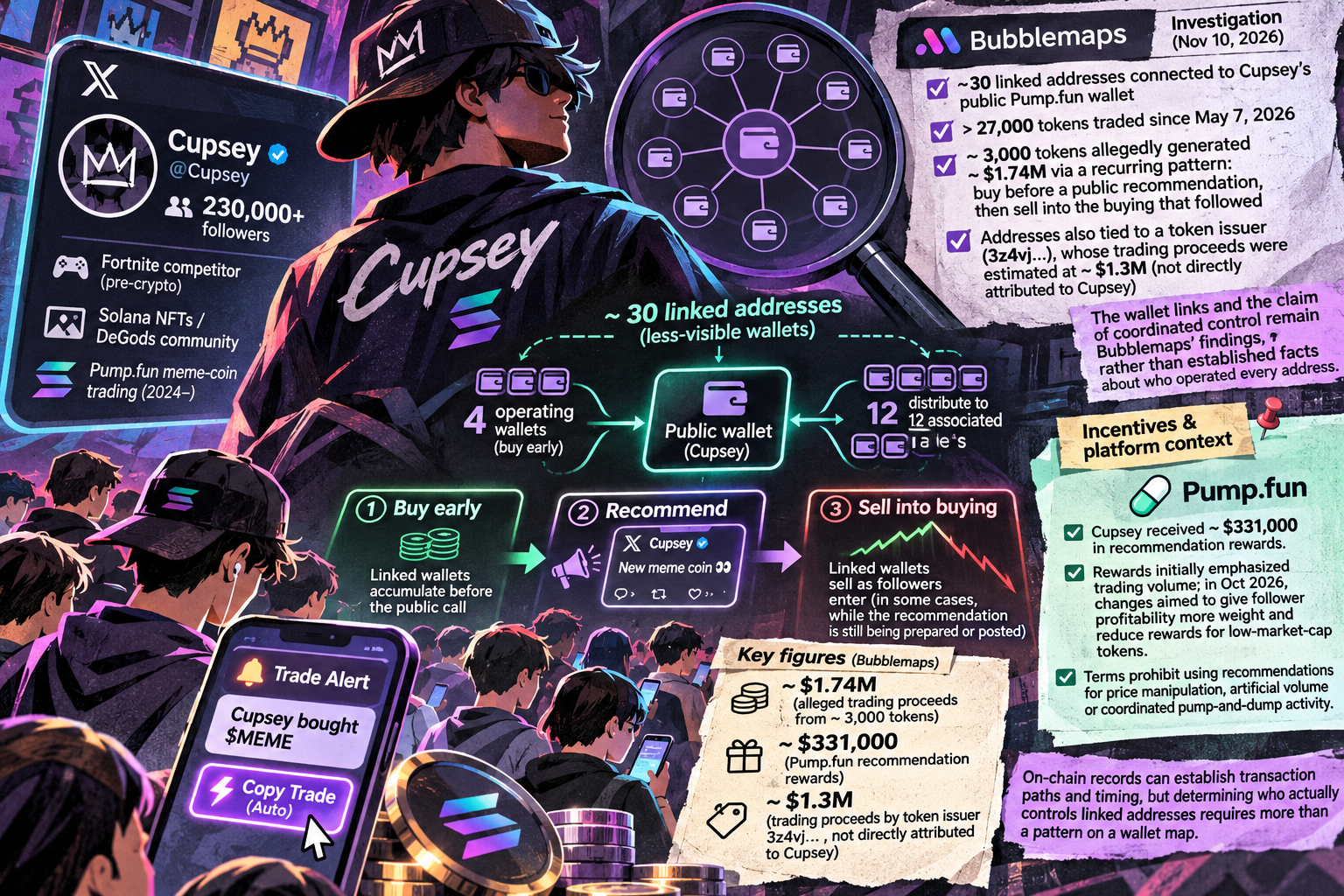
Bubblemaps linked roughly 30 less-visible addresses to Cupsey’s public Pump.fun wallet. It said those addresses had traded more than 27,000 tokens since May 7, 2026, and alleged that trades involving about 3,000 tokens generated roughly $1.74 million through a recurring pattern: buy before a public recommendation, then sell into the buying that followed.
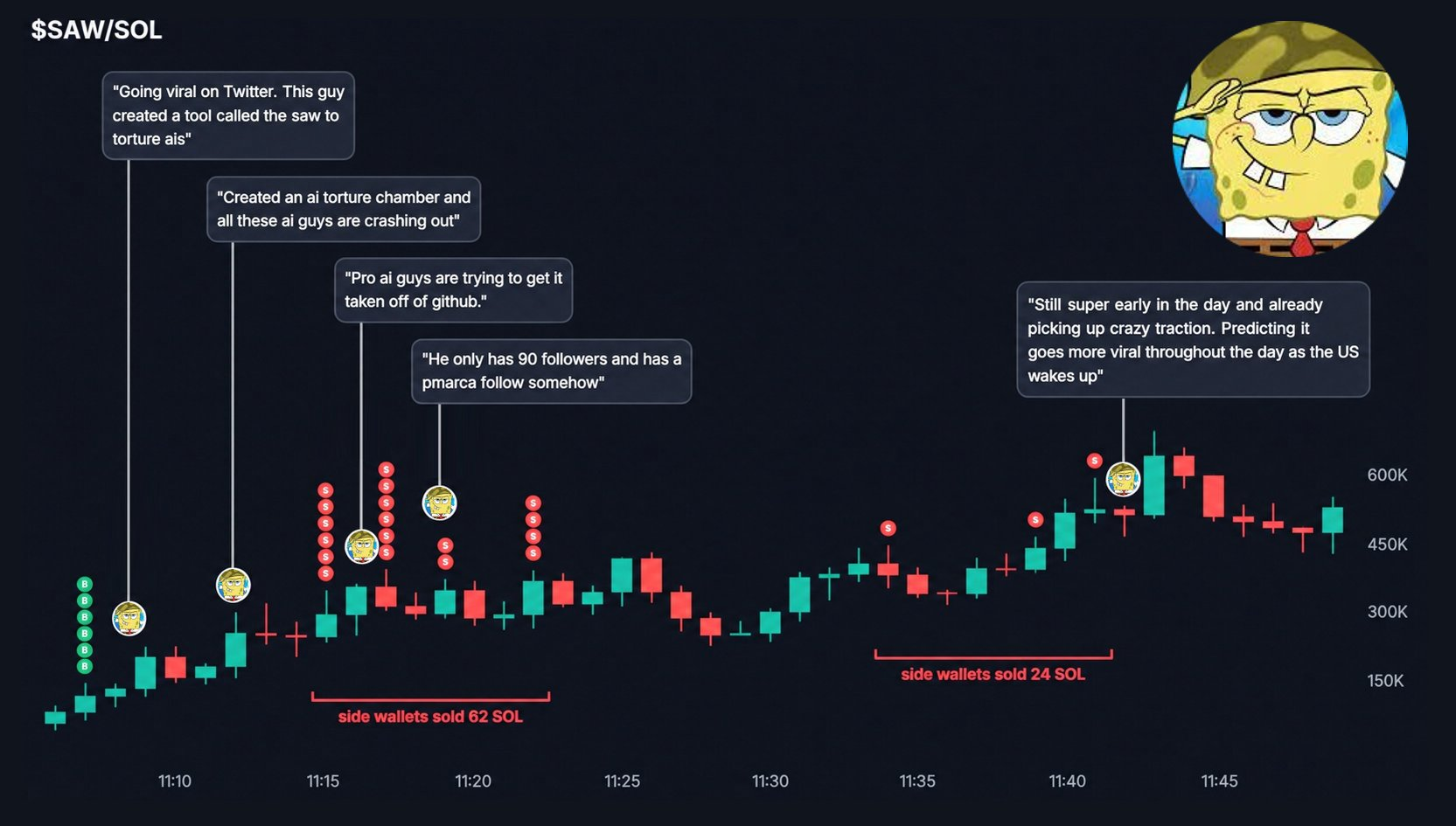
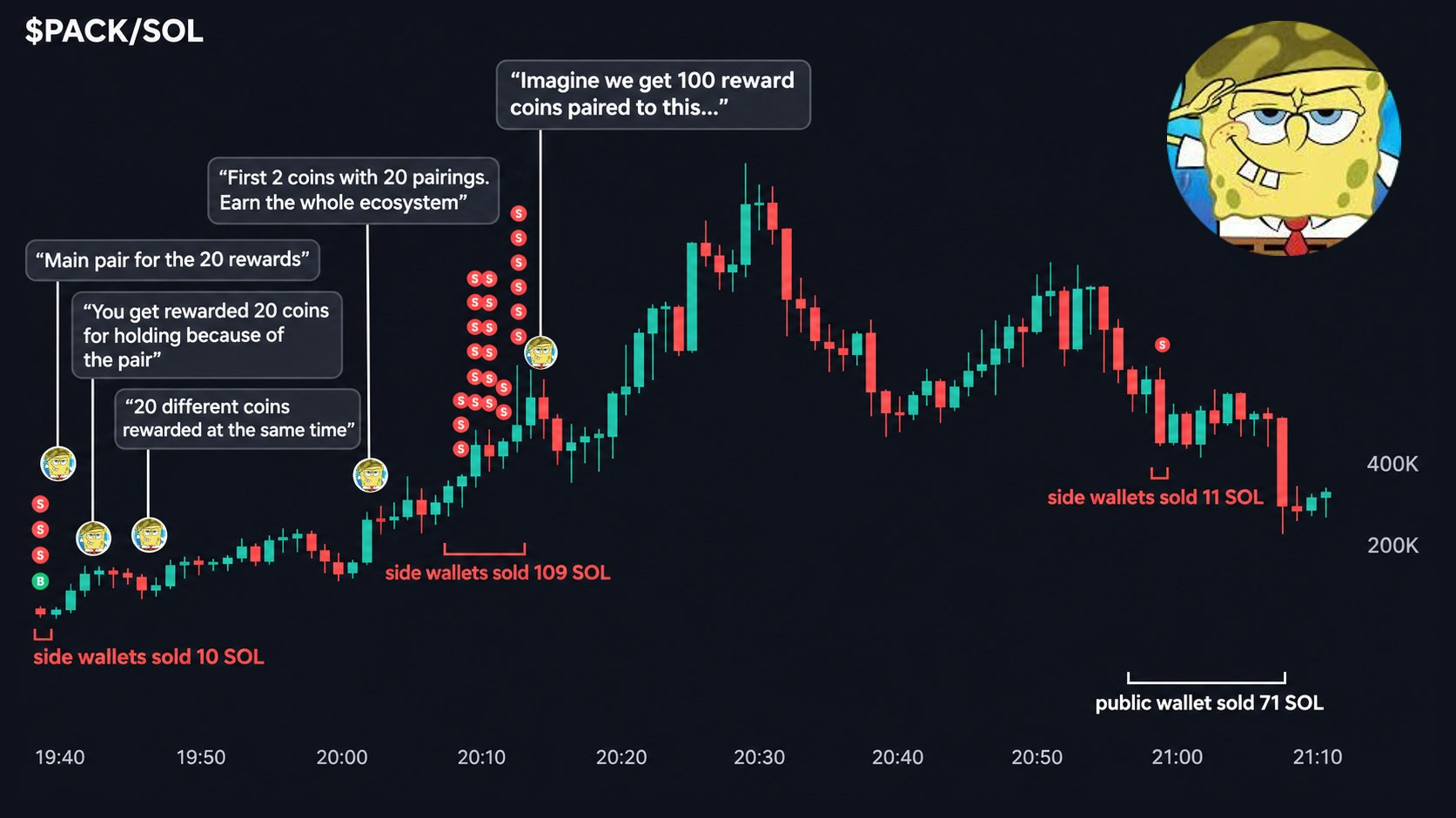
According to the firm, four operating wallets bought tokens and distributed holdings among 12 associated wallets. Cupsey’s public wallet would then buy the same token and a recommendation would appear on social media. Bubblemaps said the other wallets sold as followers entered; in some cases, it reported, sales occurred while the recommendation was still being prepared or posted. The wallet links and the claim of coordinated control remain Bubblemaps’ findings, rather than established facts about who operated every address. As of the November 10 report, Cupsey had not given a clear response to the specific allegations.
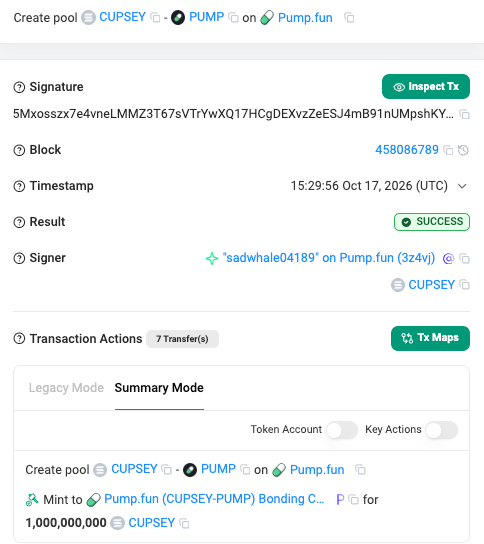
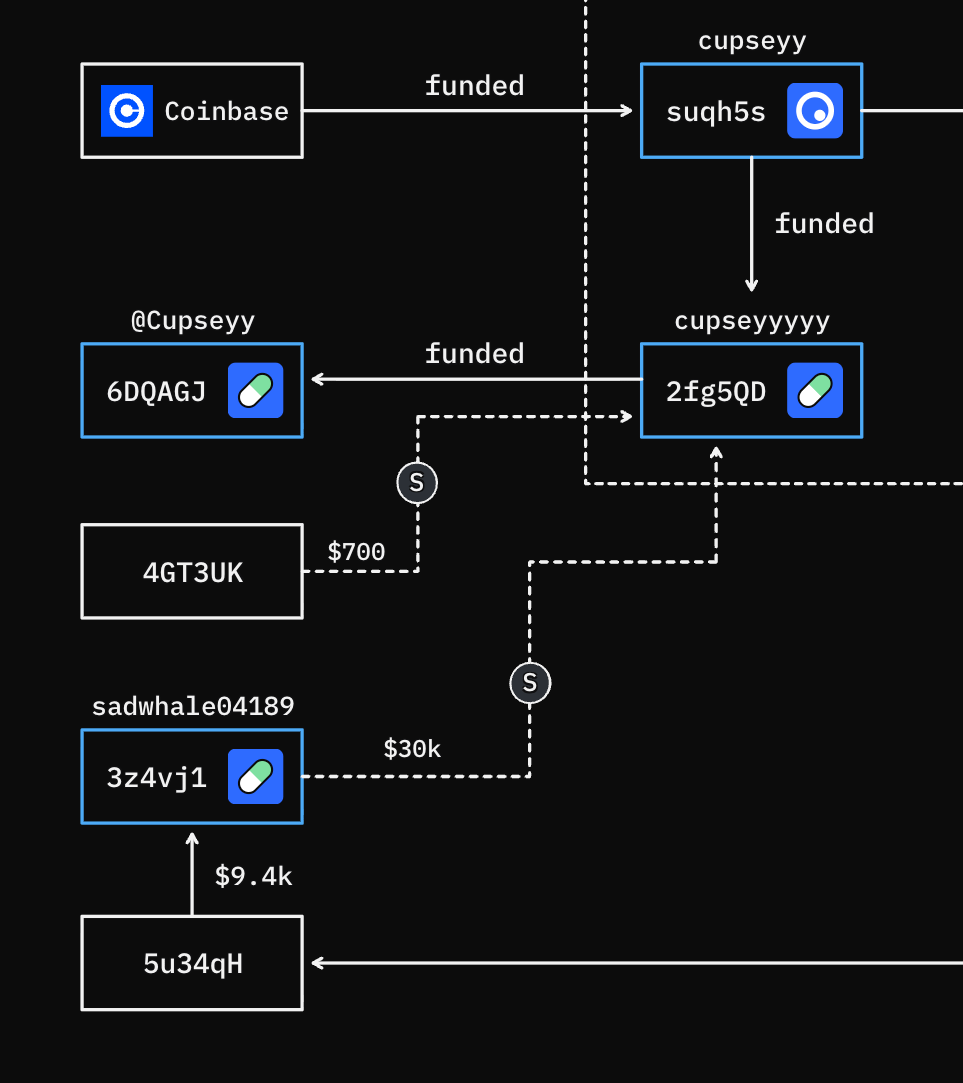
The investigation also associated the addresses with a token issuer whose address begins 3z4vj. Bubblemaps said wallets it identified as Cupsey-linked bought early into more than 400 tokens issued by that address, including one called CUPSEY. It estimated the issuer’s trading proceeds at about $1.3 million but did not directly attribute that sum to Cupsey.
Why the incentives matter
The report said Cupsey also received approximately $331,000 in Pump.fun recommendation rewards, separate from the alleged trading proceeds. Pump.fun allows users to recommend tokens and notify followers. Its rewards initially emphasized trading volume; in October 2026, co-founder Alon announced changes intended to give follower profitability more weight and reduce rewards for recommendations of low-market-cap tokens. The platform’s terms prohibit using recommendations for price manipulation, artificial volume or coordinated pump-and-dump activity. As of the report, Pump.fun had not publicly commented on the Cupsey allegations.
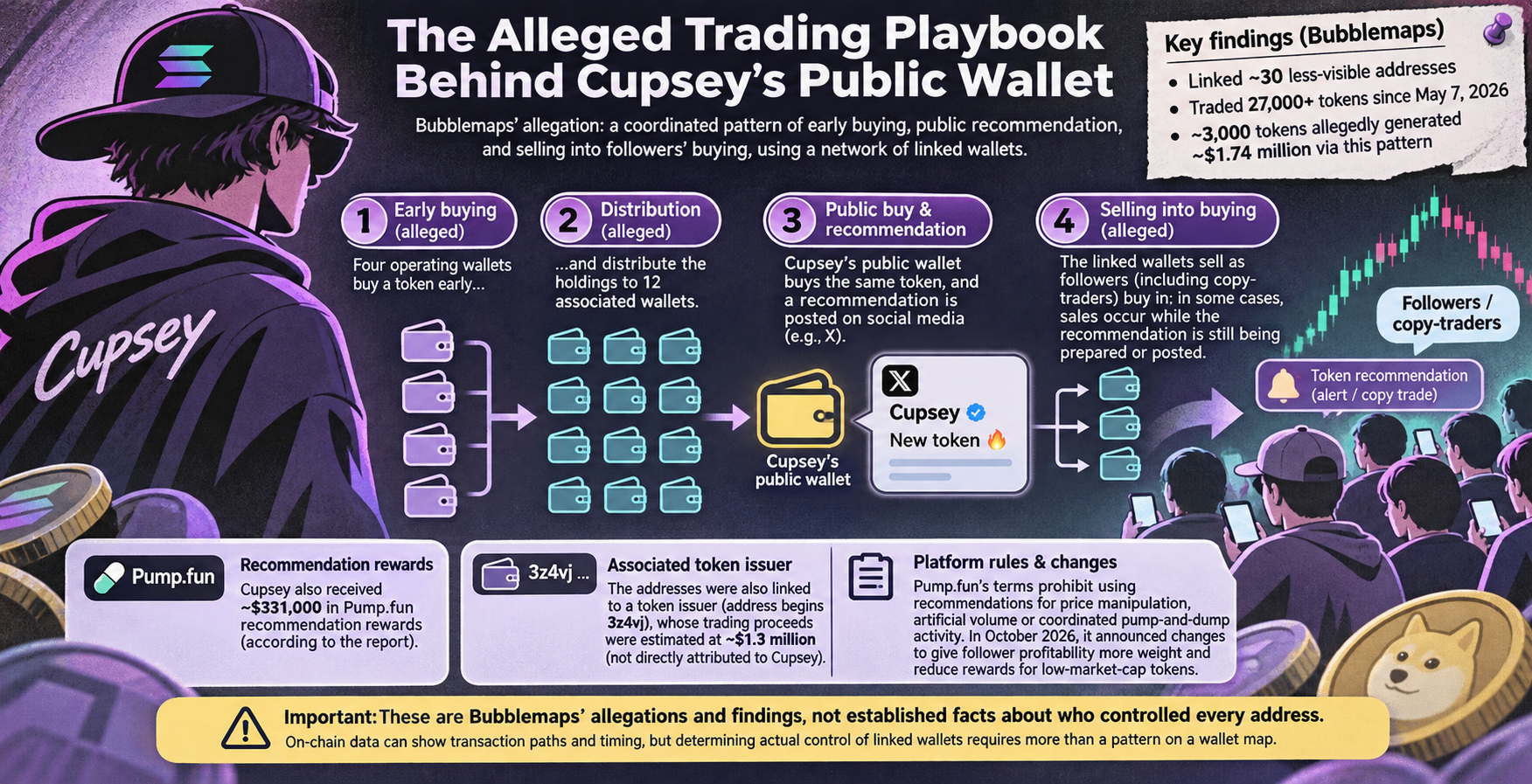
Bubblemaps argued that a public wallet can attract copy-traders without showing all of a trader’s possible holdings. On-chain records can establish transaction paths and timing, but determining who actually controls linked addresses requires more than a pattern on a wallet map. That uncertainty matters here: the cultural appeal of following a recognizable trader is precisely what makes the gap between a visible wallet and alleged hidden positions consequential.