In an X post discussed by Odaily on November 9, 2026, Vitalik Buterin argued that Ethereum should put more weight on ETH’s role as a store of value—and less on fee burns as its defining value narrative. He did not call for removing EIP-1559 or its burn mechanism. In his view, even if burns remain below 10% of new ETH issuance over the long term, that need not be a disappointment.
Why a burn is not a firm floor
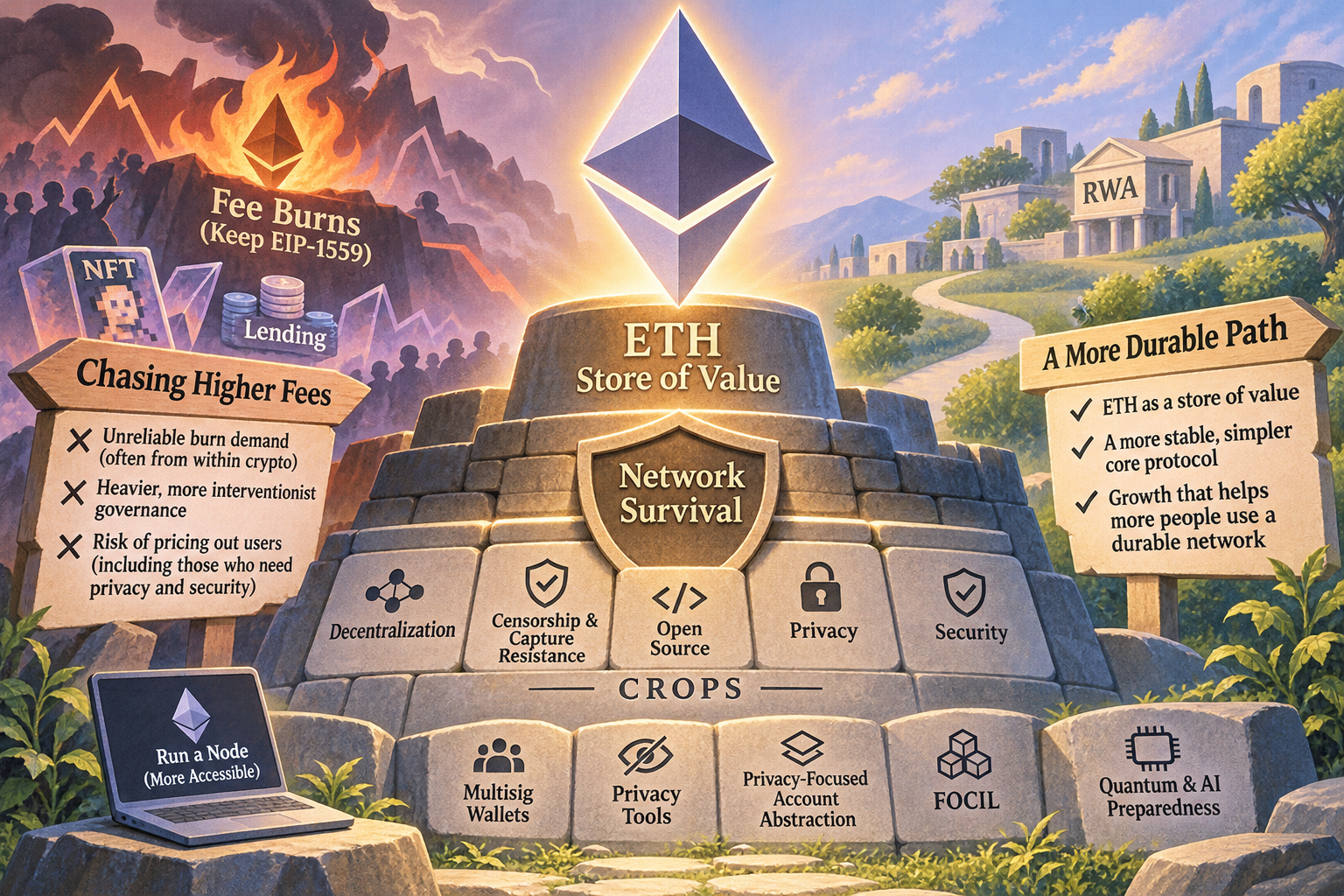
Buterin described the valuation argument for fee burns with a simplified example: a token that reliably burns $1 billion in fees each year could be valued at roughly $25 billion using a 4% discount rate. The word reliably matters. Much of Ethereum’s substantial fee burning from 2021 to 2023 came from activity within crypto, whose spending capacity could fall along with ETH’s price. He cited an NFT buying rush that once burned about $180 million in fees in a day, as well as more routine lending activity.
Growing real-world asset (RWA) activity could provide demand from outside crypto, he argued. But mature, steady businesses are unlikely to reproduce the enormous daily fees generated by a speculative rush.
What chasing fees could cost
To justify ETH’s then-approximately $270 billion market value primarily through burns, Buterin suggested Ethereum would have to operate at a scale comparable to a major company such as L’Oréal. In a hypothetical comparison based on what he described as an AI-generated estimate of L’Oréal’s research-and-development spending, he put the figure at about 0.58% of market value annually. Applied to Ethereum, he estimated that protocol funding of around 700,000 ETH a year might be needed and validator revenue could fall by about two-thirds. These were estimates for his scenario, not proposed funding rules.
His broader concern was social as well as financial: allocating large sums and continually choosing new markets or products could require more interventionist governance. Pursuing higher fees could also price out users seeking privacy and security. Maximizing fee price × usage, he argued, is different from enabling as many people as possible to use the network safely.
A narrative built around survival
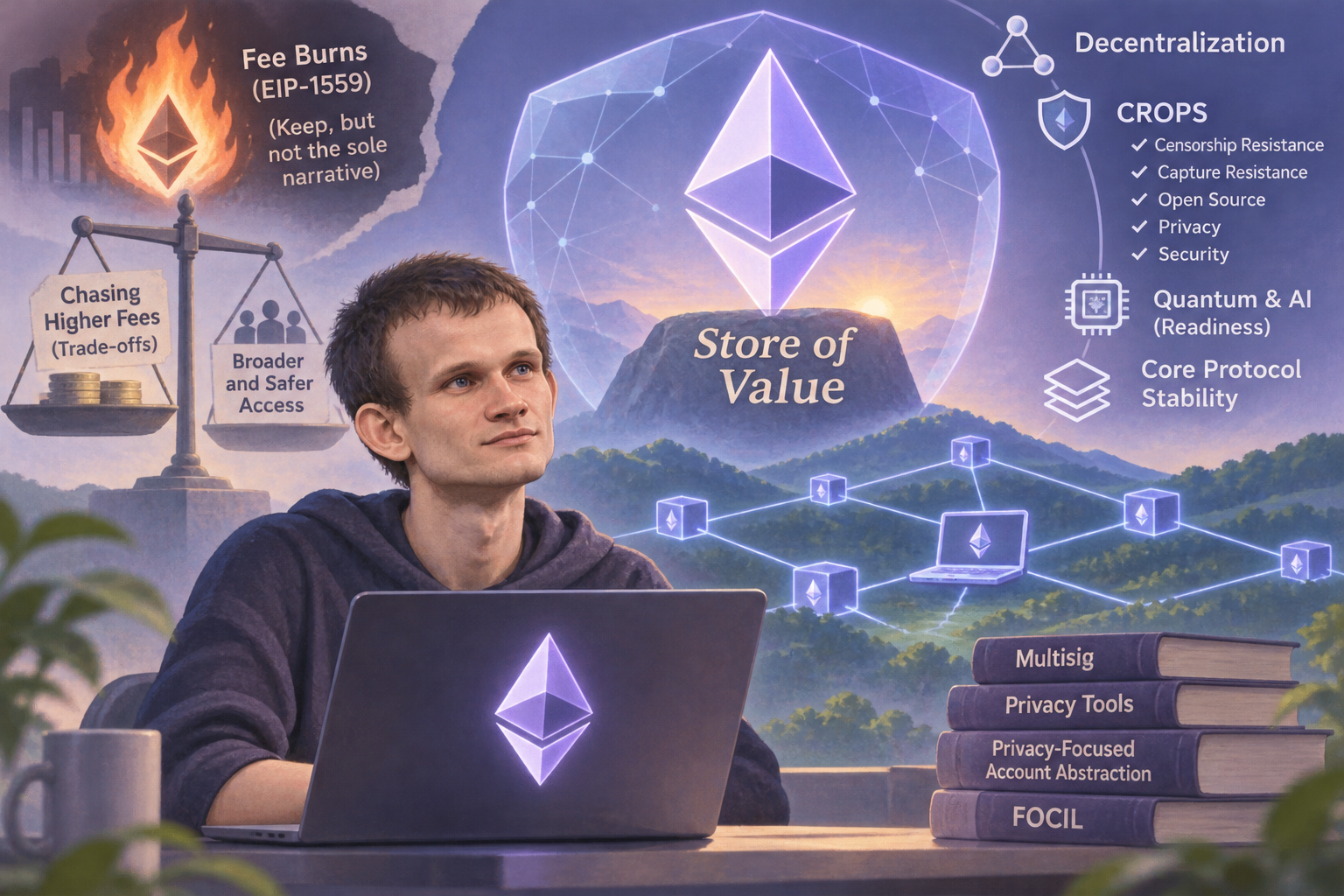
Buterin said people he asks about Ethereum often point to decentralization and what he calls CROPS: censorship and capture resistance, open source, privacy and security. For someone holding ETH primarily as a store of value, he argued, the central test is whether the network can endure. That calls for cautious security decisions, attention to quantum computing and AI, and a core protocol that becomes more stable over time rather than continually more complex.
He pointed to work on multisignature wallets, privacy tools, privacy-focused account abstraction and FOCIL, alongside reducing reliance on infrastructure providers. As an example of node accessibility, he said he can run a node on a laptop that syncs in under six hours and uses about one-eighth of its disk space—an improvement, he said, over 2019.
The argument is not that applications or RWAs do not matter. More assets issued natively on Ethereum could make ETH more useful for exchange or as collateral, Buterin said, while still involving trade-offs with decentralization. His proposed distinction is between growth that helps people use a durable network and a strategy that treats ever-higher fee burns as the goal.
Source: odaily.news (originally published 2026-11-09 09:54 UTC+8)