Originally reported November 9, 2026, at 16:05 Beijing time.
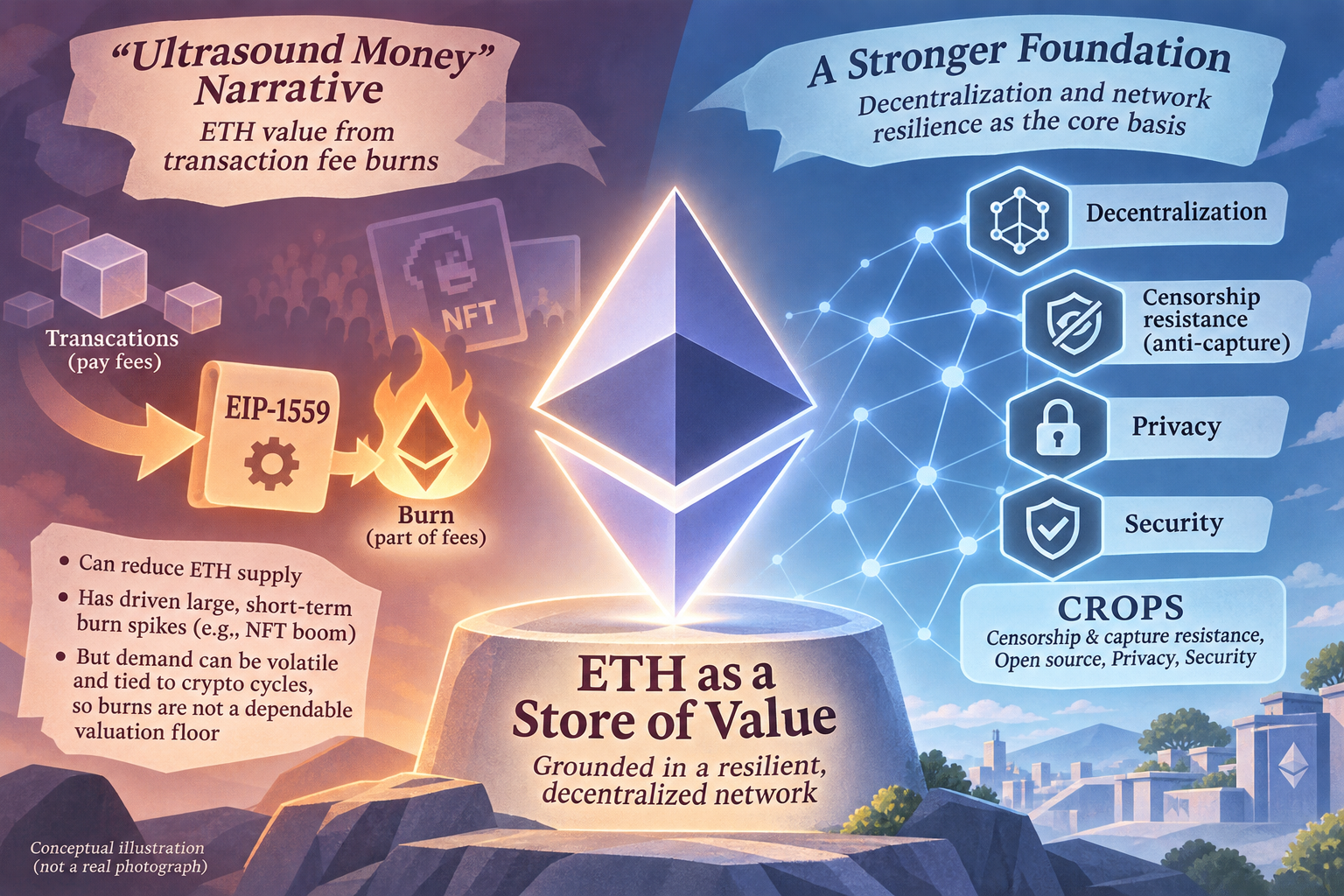
“Ultrasound money” became a familiar ETH-holder story during the 2021 bull market: if Ethereum burned enough transaction fees, the shrinking supply could help explain ETH’s value. In an X post on the evening of November 8, Vitalik Buterin argued for a different emphasis. He said it makes more sense to discuss ETH as a store of value than as a token valued primarily by fee burns.
Buterin did not call for abandoning EIP-1559. The mechanism, introduced in 2021, burns part of transaction fees, and he said it works well and should remain—even if burns offset only some new ETH issuance. In his view, Ethereum’s decentralization and continuing work on censorship resistance, privacy and security offer a stronger basis for the store-of-value case.
What the NFT boom showed
Buterin challenged the idea that fee burns create a dependable floor for ETH’s valuation. He illustrated the model with $1 billion in annual burns and a 4% discount rate, which would imply a theoretical $25 billion floor. But much of the demand behind burns in 2021–2023 came from within crypto, he argued, and could contract alongside ETH’s price.
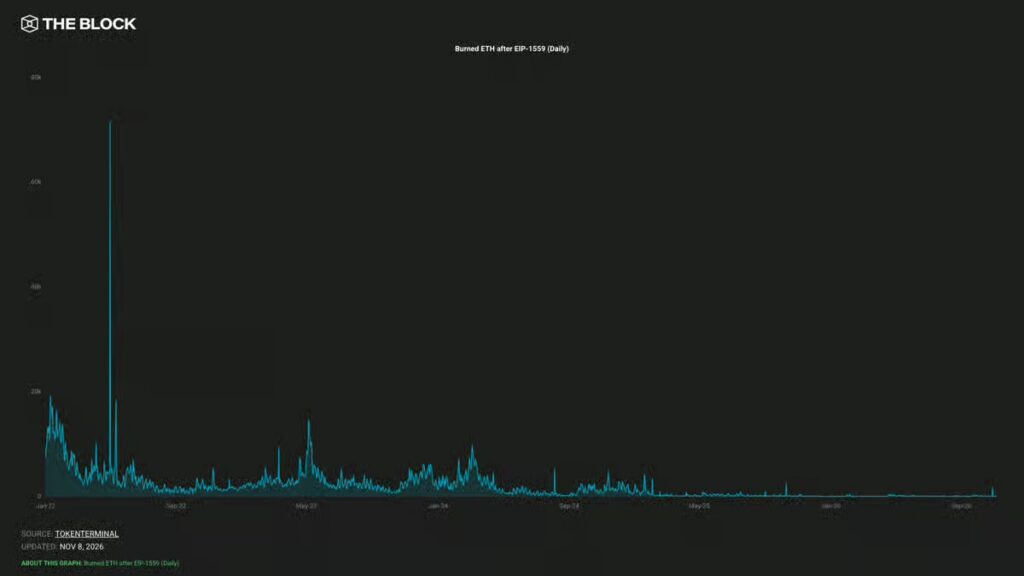
He pointed to an NFT sale that drove $180 million in fee burns in a single day. The article identifies it as Yuga Labs’ Otherside land sale, when buyers of Otherdeed NFTs paid fees that sometimes exceeded $10,000. The episode shows how a burst of participation can produce extraordinary burns without making that level of demand durable. Buterin said real-world sources of fee demand would make the valuation argument more credible, while noting that steadier activity such as real-world asset tokenization is unlikely to recreate past fee spikes.
The Block reported roughly 1.48 million ETH burned in 2022, worth about $3.6 billion, versus approximately 19,200 ETH, worth $43 million, so far in 2026 as of the original report.
A different measure of resilience
Buterin said prioritizing burns could encourage more interventionist governance and, to some extent, higher gas fees—at odds with decentralization and with access for people who particularly need privacy and security. Instead, he pointed to the network’s ability to endure. He said community members he had asked most often valued decentralization and what he calls CROPS: censorship and capture resistance, open source, privacy and security.
The distinction remains contested as a matter of ETH’s narrative, not a change to its rules. A separate proposal, EIP-8363, would have increased the share of validator rewards burned as staking grew. Its co-authors withdrew it from consideration for the planned Hegota upgrade five weeks before Buterin’s post. Anatoly Yakovenko, Gabriel Shapiro and Simon Dedic each voiced support for aspects of Buterin’s argument, though Dedic framed the store-of-value story as a bullish case.
Source: panewslab.com (originally published 2026-11-09 16:05 UTC+8)