Originally reported by PANews on September 15, 2026, at 20:30 (UTC+8).
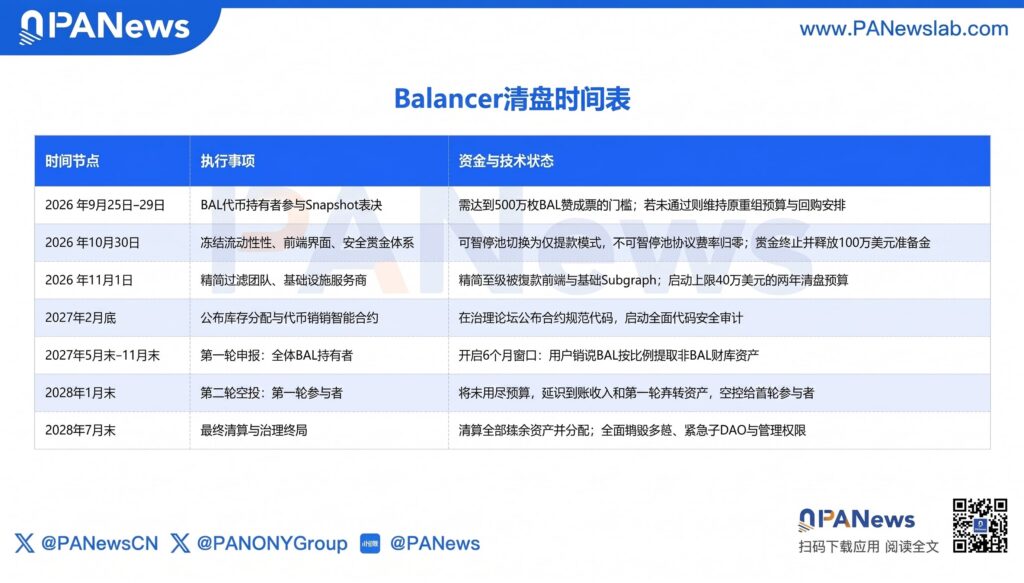
Balancer, a DeFi protocol that once held as much as $3 billion in total value locked, faced a proposed end to its operations. On September 15, Balancer treasury council representative Marcus Hardt submitted a governance proposal to stop day-to-day operations and development, then wind down the protocol in stages through mid-2028. It was a proposal, not a completed liquidation.
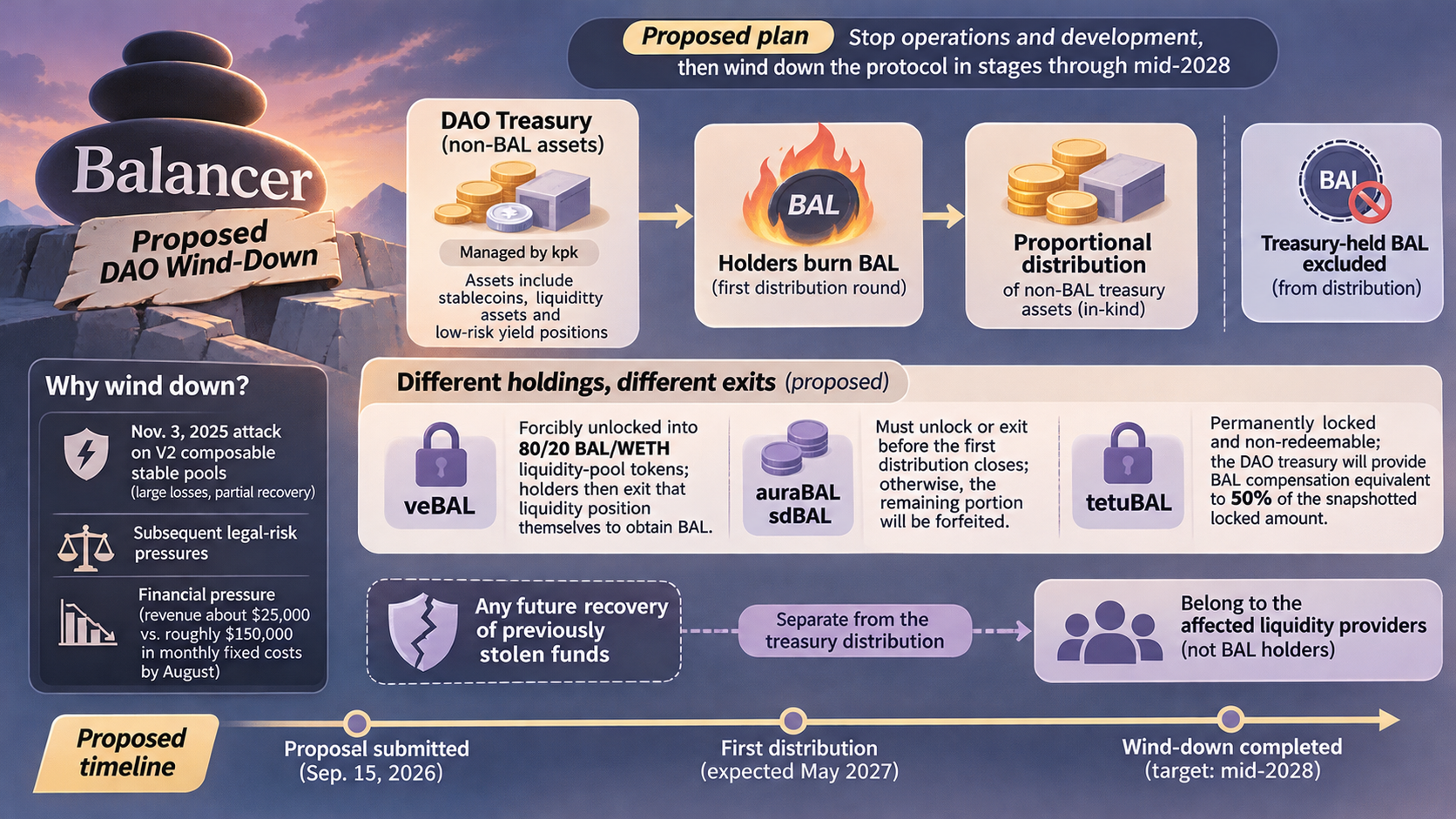
The plan would distribute at least $9 million in non-BAL treasury assets, managed by kpk, proportionally to holders who burn BAL in the first distribution round. Treasury-held BAL would be excluded. PANews reported that BAL’s circulating market value was approximately $8 million at the time.
Different holdings, different exits
The proposed process would not treat every Balancer-linked token alike. veBAL locks would be forcibly unlocked into 80/20 BAL/WETH liquidity-pool tokens; holders would then need to exit that liquidity position themselves to obtain BAL for the liquidation process. Holders of third-party derivatives auraBAL and sdBAL would need to unlock or exit before the first distribution closes. For tetuBAL, which the proposal describes as permanently locked and non-redeemable, the DAO treasury would provide BAL compensation equivalent to 50% of the snapshotted locked amount.
The proposal would also keep any future recovery of previously stolen funds separate from the treasury distribution. Those funds, if recovered, would belong to affected liquidity providers rather than BAL holders.
Why the wind-down was proposed
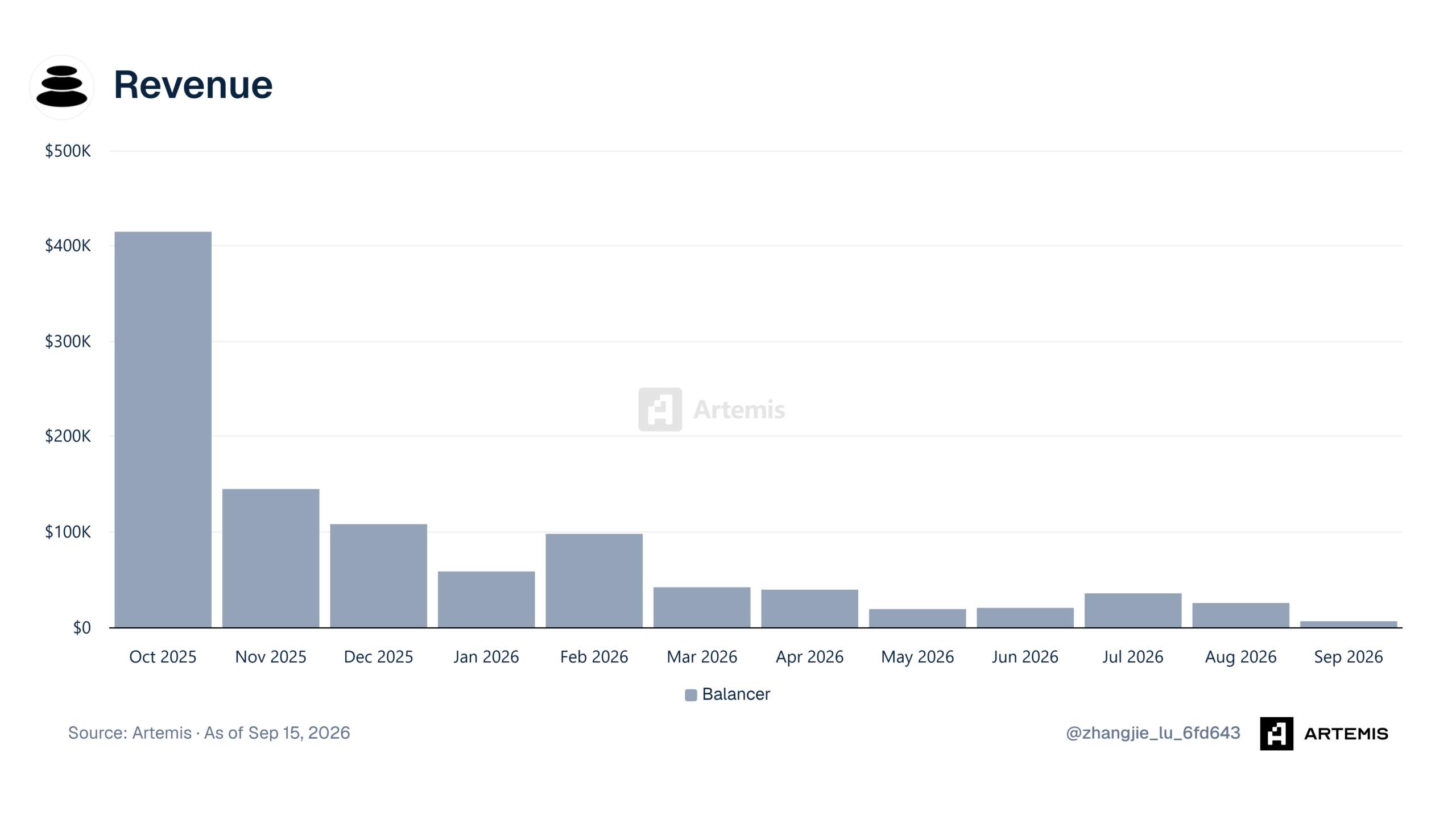
PANews linked the decision to the November 3, 2025, attack on Balancer V2 composable stable pools, reporting losses exceeding $128 million across several chains and approximately $28 million recovered with white-hat assistance. It also described subsequent legal-risk and financial pressures. Governance reforms introduced in March 2026 had reduced spending and changed BAL emissions and fee allocation, but PANews reported that by August, monthly protocol revenue was about $25,000 against roughly $150,000 in monthly fixed costs.
For the community, the question was not simply whether to keep the protocol running. The proposal set a long timetable for returning remaining assets, with the first distribution expected in May 2027. PANews described a tension between preserving treasury capital and allowing the protocol to continue, while noting the wait for holders and the potential migration costs for projects built on Balancer.
Source: panewslab.com (originally published 2026-09-15 20:30 UTC+8)