Originally reported by 深潮 TechFlow on November 10, 2026, at 20:53 (UTC+8).
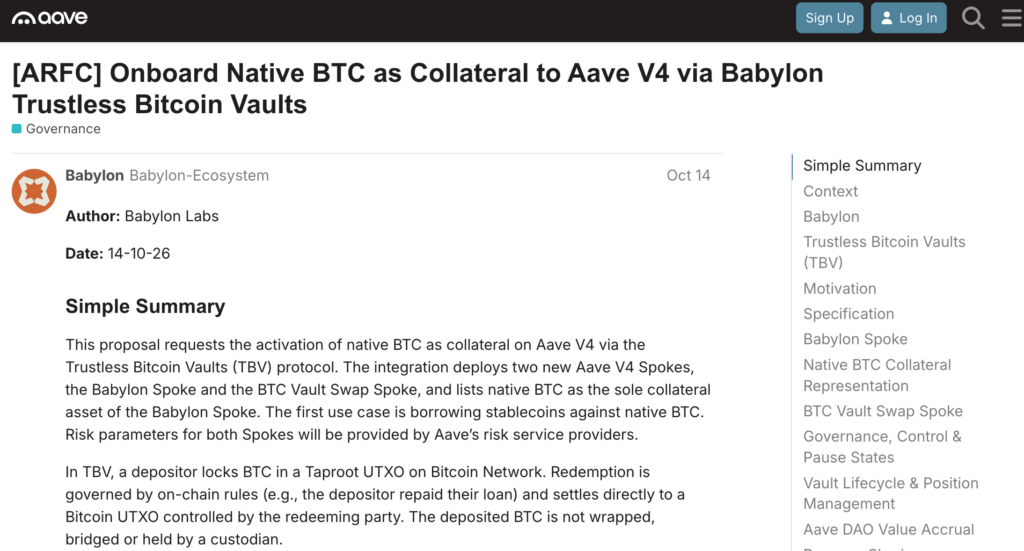
Aave DAO’s November 9 vote was unanimous in favor of an ARFC proposal to bring native Bitcoin collateral to Aave V4 through Babylon’s trustless Bitcoin vaults. It was a step in Aave’s governance process, not a final launch approval: an AIP on-chain execution vote was still to come. The proposal targeted a mainnet launch by the end of 2026, with participation and size limited initially.
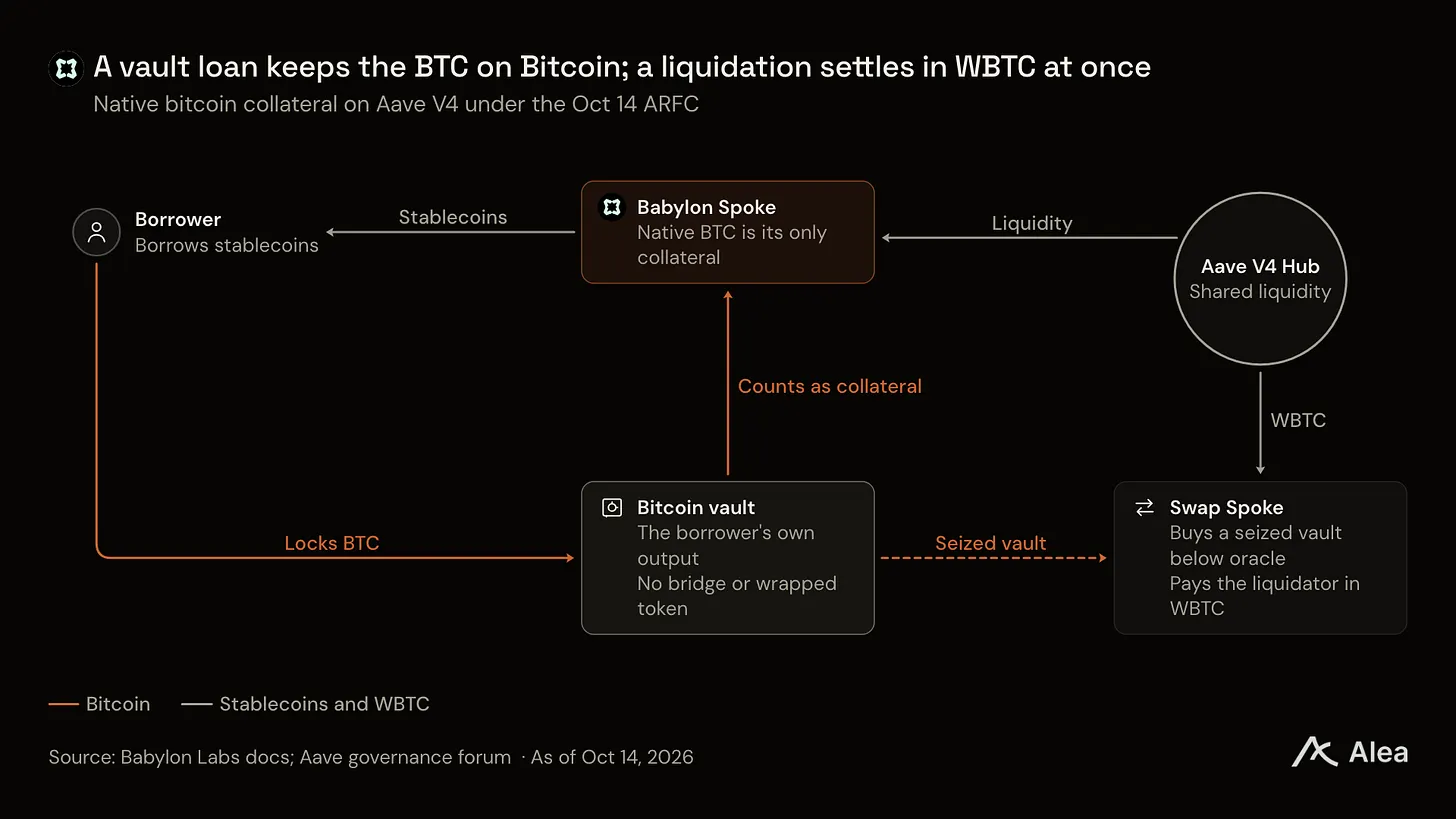
The proposed design would let users lock BTC in a Taproot vault on Bitcoin while retaining control of their private keys. A non-transferable accounting token on Ethereum would represent the locked BTC as collateral on Aave V4, allowing borrowing in assets such as USDT and USDC. LlamaRisk proposed a 78% collateral factor and a maximum liquidation bonus of 5.55%.
The distinction from wrapped-Bitcoin collateral matters, but it has a boundary. The BTC would not need to be handed to a custodian for the collateral step. Liquidations would still rely on WBTC: under the proposal, a liquidator would buy a seized vault with WBTC, after which an arbitrageur could redeem the BTC on Bitcoin.
The proposed initial limits were a 300 BTC collateral cap and about $21 million in credit across USDT, USDC, USDG, RLUSD and GHO. Increases would require Aave DAO approval. A 3-of-5 multisignature group including Aave Labs, LlamaRisk and Babylon would be able to pause or resume the system without a time lock; a pause would also block repayments and liquidations. The group would not have authority to move users’ BTC.
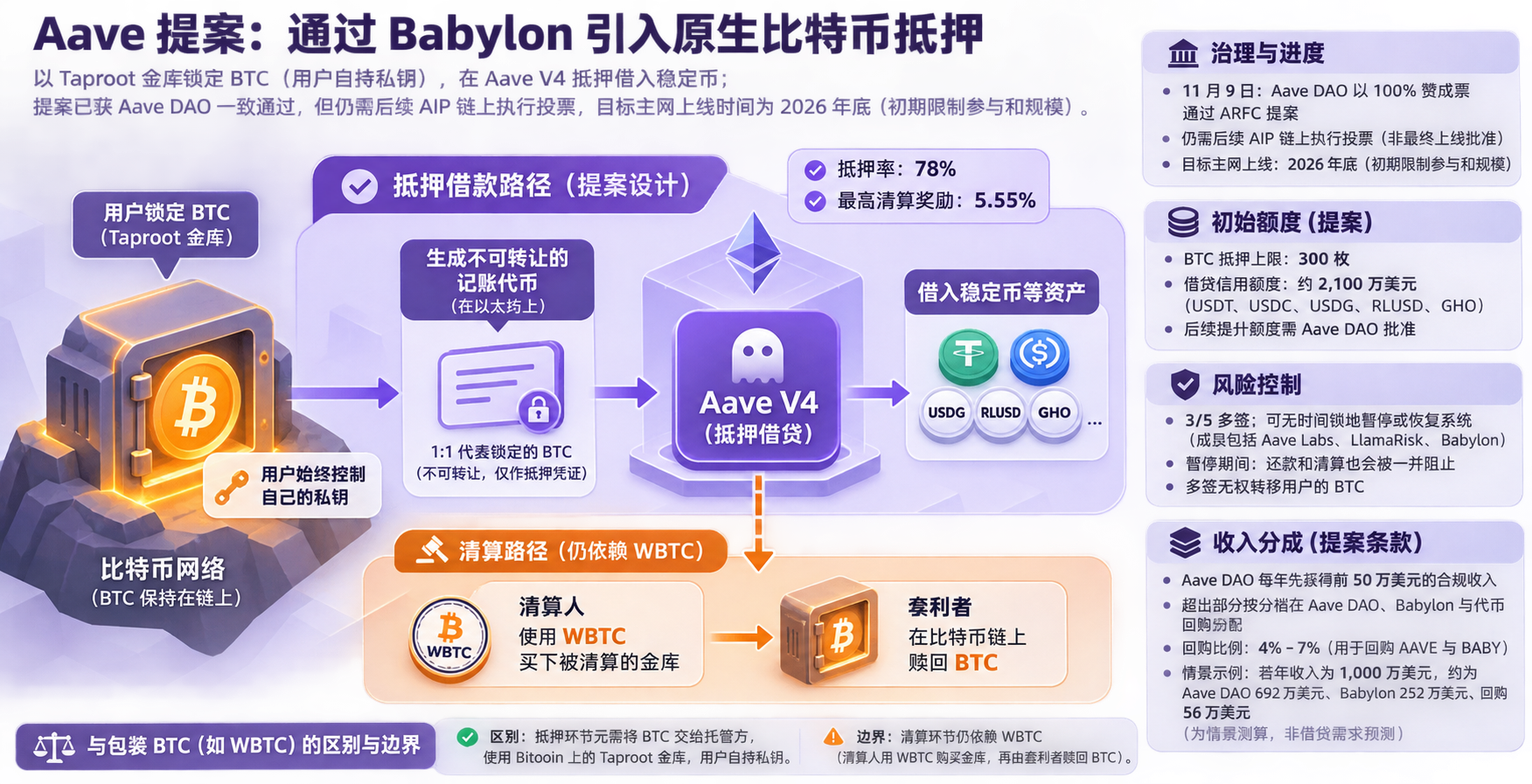
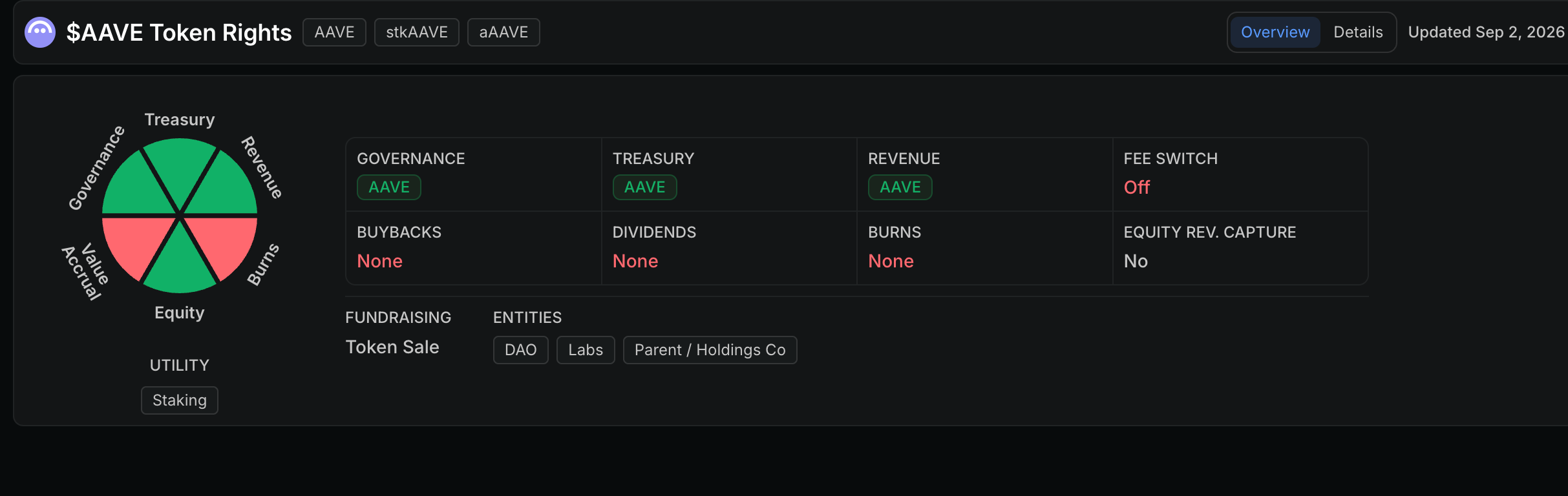
The revenue terms also remain part of the proposal, rather than an established income stream. Aave DAO would receive the first $500,000 in annual eligible revenue. Above that threshold, revenue would be split among Aave DAO, Babylon and token buybacks according to tiers; the proposed buyback share ranges from 4% to 7%. For a hypothetical $10 million in annual revenue, Alea Research estimated roughly $6.92 million for Aave DAO, $2.52 million for Babylon and $560,000 for buybacks. Those figures are a scenario, not a forecast of borrowing demand.
Source: techflowpost.com (originally published 2026-11-10 20:53 UTC+8)