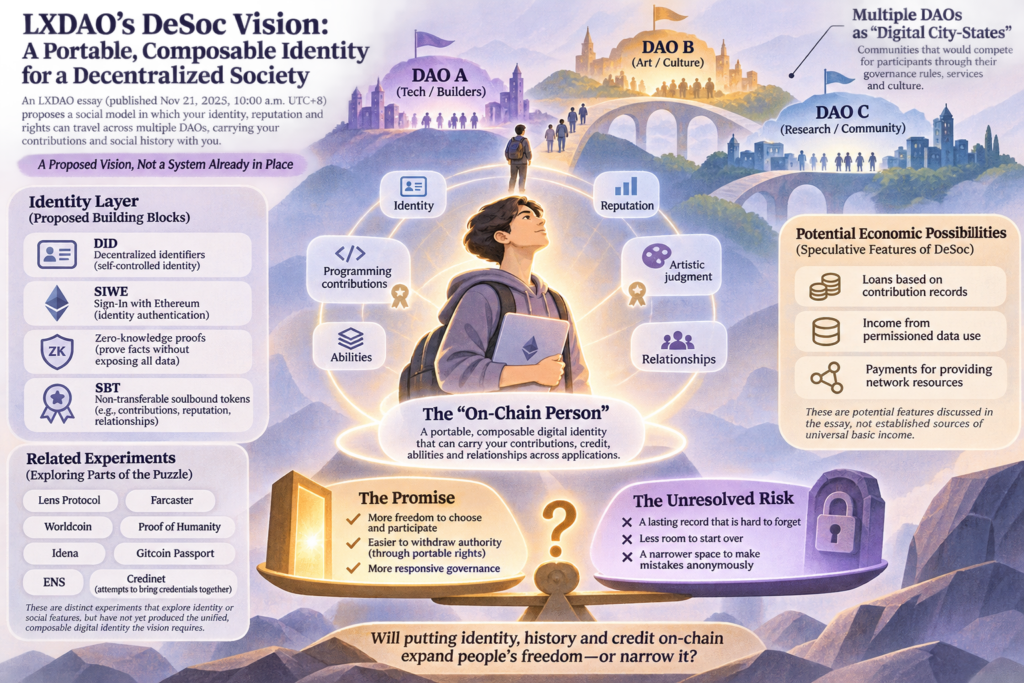
An online identity that carries your contributions from one community to another is the starting point of LXDAO’s vision for a decentralized society, or DeSoc. In an essay published on November 21, 2025, at 10:00 a.m. UTC+8, LXDAO argues that portable identity, reputation and rights could let people participate in multiple DAOs without leaving their social history behind. It is a proposed social model, not a description of a system already in place.
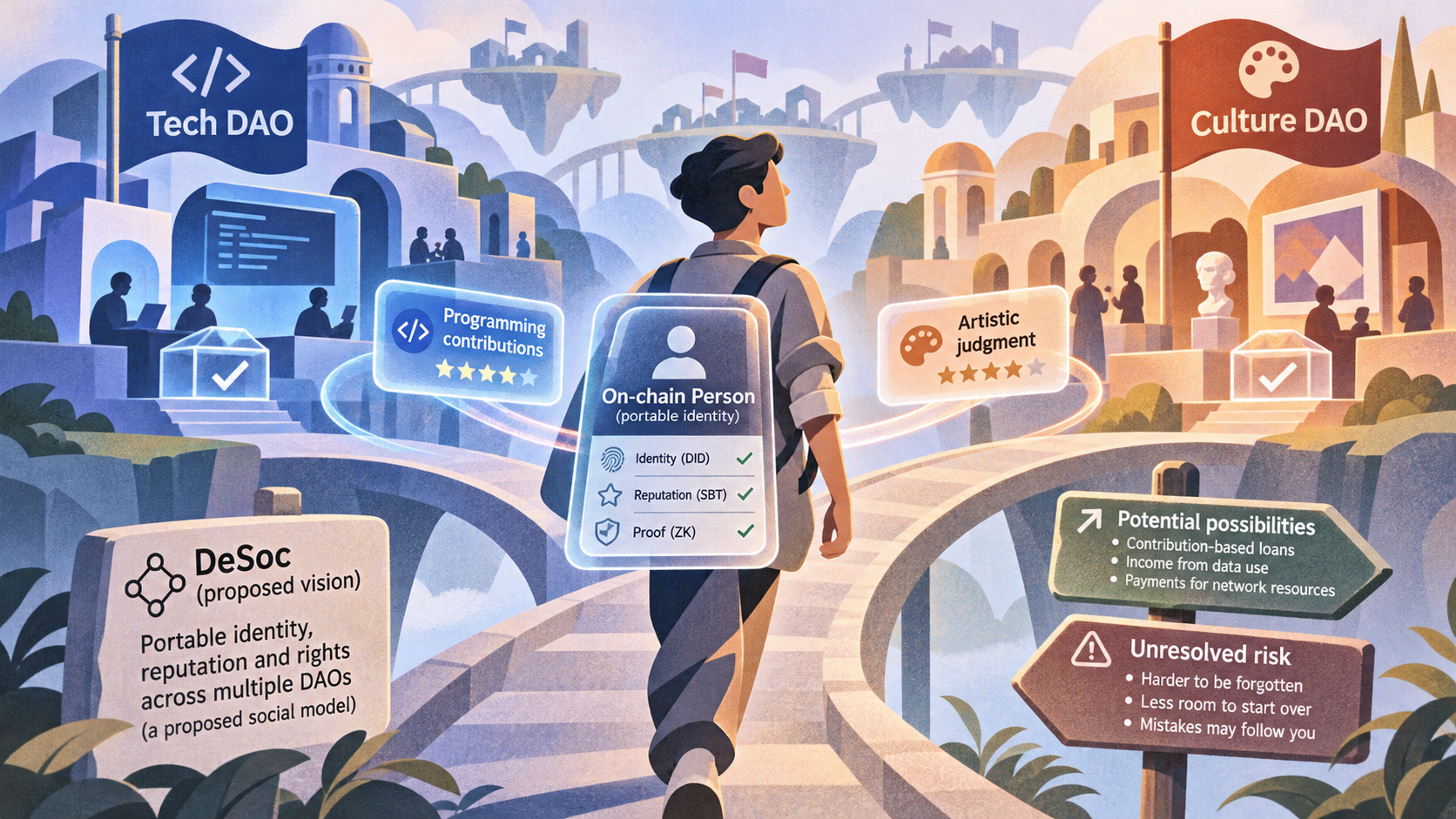
A portable social history
LXDAO calls its proposed foundation the “on-chain person”: someone whose identity, credit, abilities and relationships can be represented and combined across applications. The essay discusses decentralized identifiers, Sign-In with Ethereum, zero-knowledge proofs and non-transferable soulbound tokens as possible parts of that identity layer. It points to Lens Protocol, Farcaster, Worldcoin, Proof of Humanity, Idena, Gitcoin Passport and ENS as distinct identity or social experiments, while acknowledging that they have not produced the unified, composable digital identity its vision requires. It also describes Credinet’s attempt to bring separate credentials together.
The community question is what happens when a record of participation becomes portable. LXDAO imagines a person holding a reputation for programming contributions in one DAO and for artistic judgment in another. It likens DAOs to “digital city-states” that would compete for participants through their governance rules, services and culture. That comparison is the essay’s framework—not evidence that moving between communities is already frictionless.
The promise and the unresolved risk
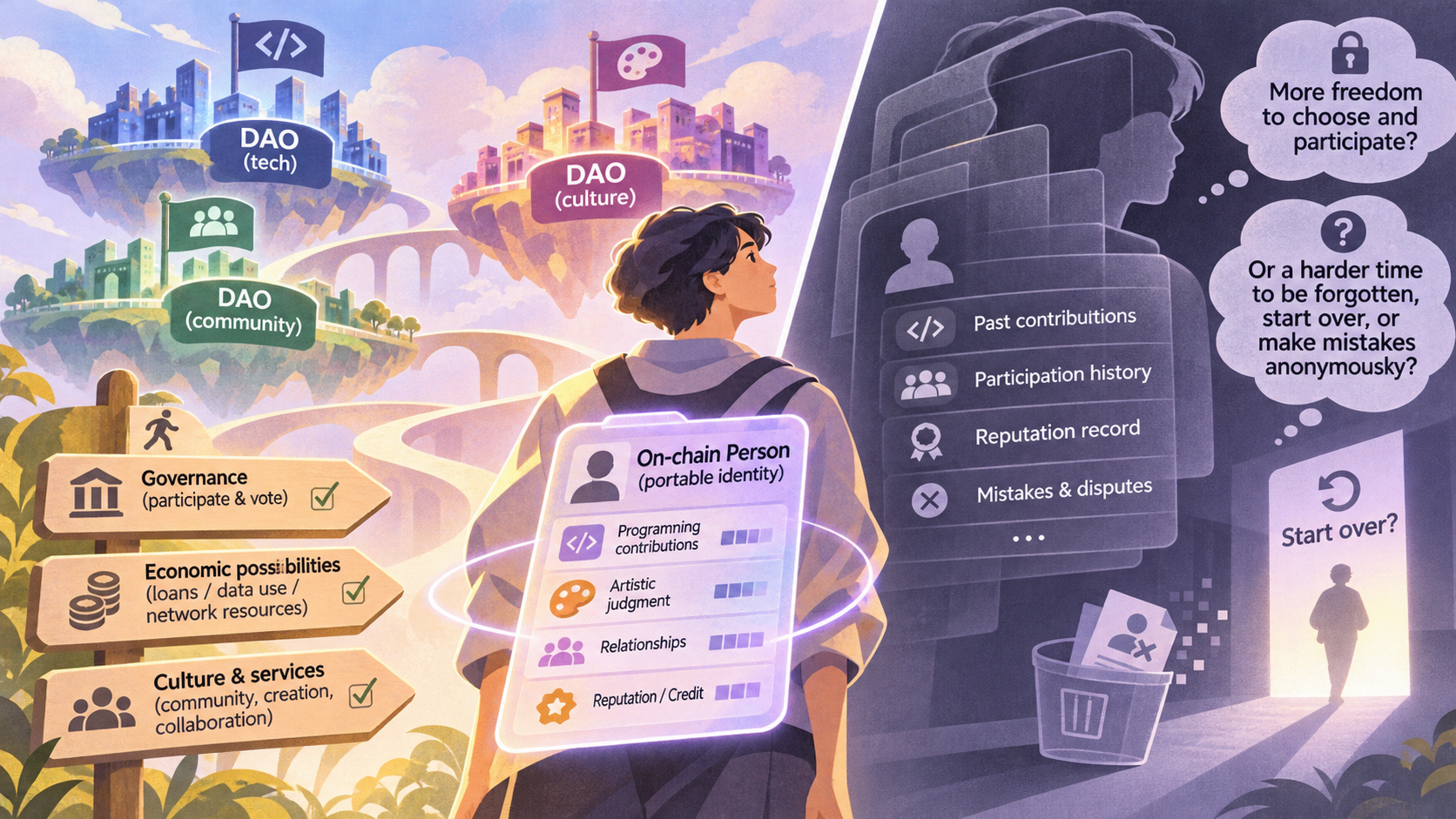
The essay extends its identity model into speculative economic possibilities: loans based on contribution records, income from permissioned data use, and payments for providing network resources. It presents these as potential features of DeSoc, not established sources of universal basic income. Its broader claim is that portable rights could make authority easier to withdraw and governance more responsive.
LXDAO ends by asking whether putting identity, history and credit on-chain would expand people’s freedom to choose and participate—or narrow their ability to be forgotten, start over or make mistakes anonymously. That tension matters as much to a community’s culture as its governance code: a portable reputation might open doors, but a lasting record could also follow someone where they do not want it to.
Source: panewslab.com (originally published 2025-11-21 10:00 UTC+8)