
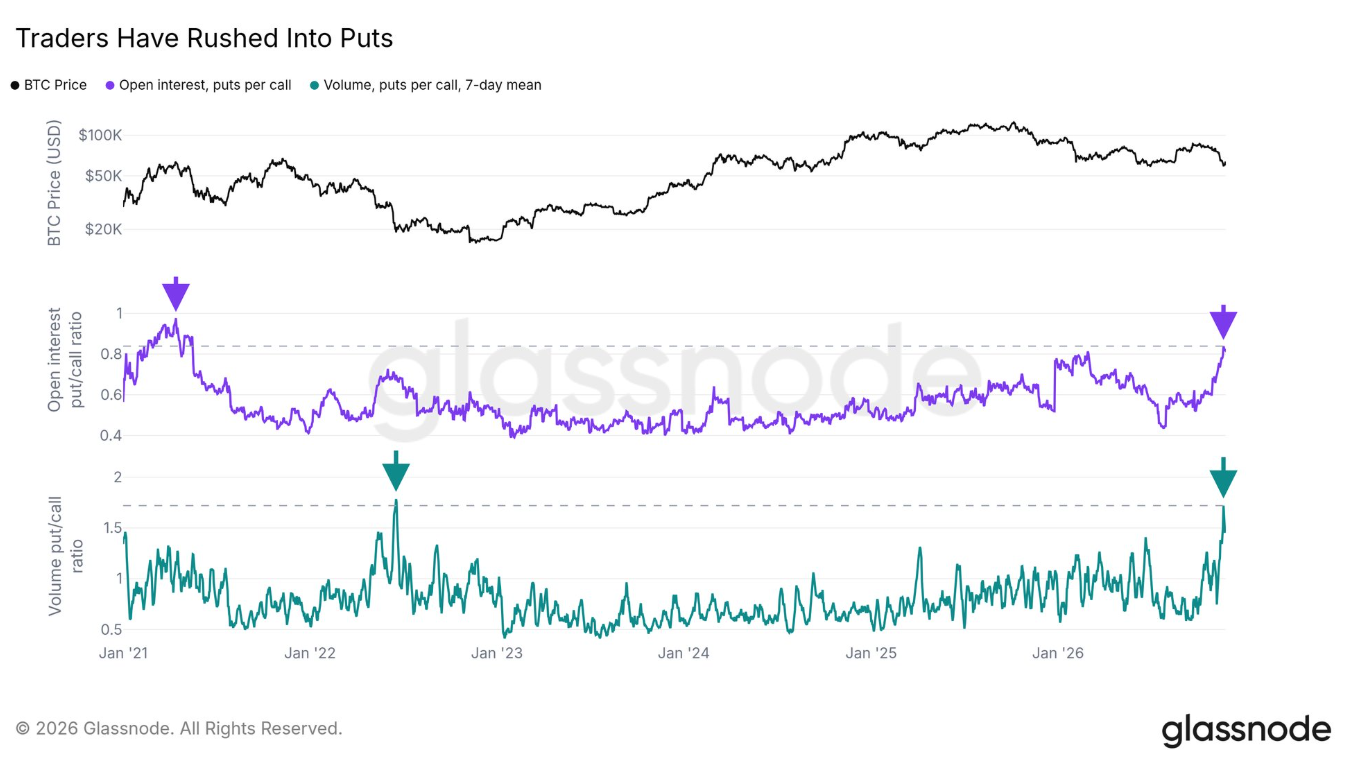
Bitcoin miners were operating on thinner margins by November 26, 2026, with about 15 months to go before the next halving. Glassnode data showed that Bitcoin’s hashrate, the computing power miners devote to the network, was 8% lower than a year earlier. It was the first year-over-year decline since China banned mining in 2021.
AMBCrypto attributed the latest decline chiefly to Bitcoin’s lower price, in contrast to the regulatory shock of 2021. The next halving will cut the BTC reward miners receive per block. If margins remain tight, more miners could switch off machines or sell bitcoin to cover costs.
Not all miner sales reflected that pressure. MARA Holdings had sold 40,581 BTC in 2026 at an average price of $74,446, raising about $3.03 billion. AMBCrypto linked much of that selling to miners’ shift toward AI.
Options traders seek protection
Bitcoin’s drop to $55,000 the previous week took it back to levels seen before the 2024 U.S. election, erasing nearly all the gains from a rally that reached $126,000. A record 11.6 million BTC was underwater, meaning those coins were worth less than their cost basis. That figure measures unrealized losses, not sales.
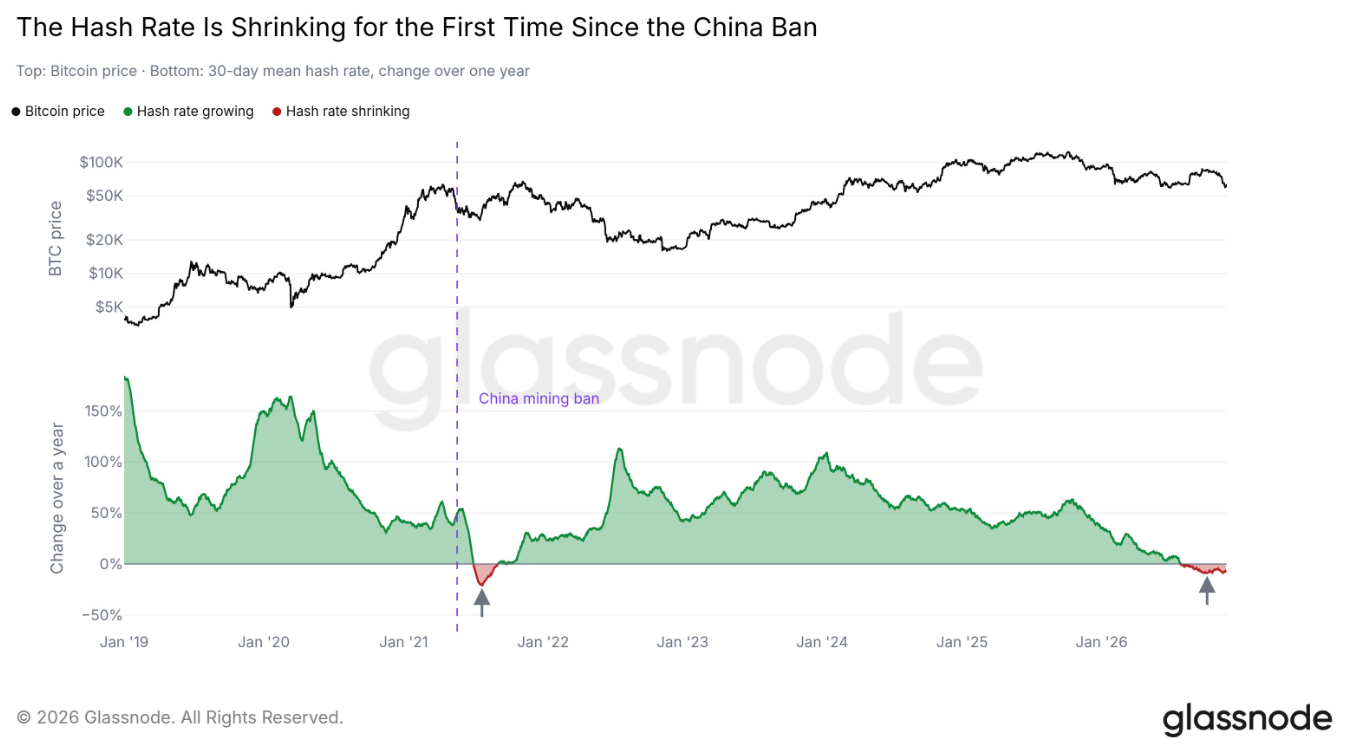
Glassnode’s options data showed put buying at levels last seen during Bitcoin’s 2022 selloff. The put-to-call ratio was at its highest since 2021. Puts give buyers the right to sell at a specified price, so the figures suggest more traders were positioning for a possible further decline. They do not establish that one would follow.