CKpool developer Con Kolivas congratulated bc1q~zy9j on X after the solo miner found Bitcoin block 977,057 on Nov. 22, 2026. The miner had about 11.1 terahashes per second (TH/s) of computing power, comparable to a few home desktop miners running together. Kolivas put the odds of a miner that size finding a block at about 1 in 1,650 in a year.
According to Bitcoin explorer Mempool, the block carried a reward of 3.129 BTC, worth $190,764 before CKpool’s 2% fee. The 3.125 BTC block subsidy accounted for $190,538, while transaction fees added 0.004 BTC, worth $226. Kolivas identified it as the 323rd block found through the solo pool.
Why use a pool to mine solo?
Most small miners join a shared pool, combining their computing power and splitting rewards in proportion to what each contributes. That gives participants a steadier payout even if they never find a block themselves.
CKpool’s solo configuration offers a different arrangement: it provides the infrastructure, so miners don’t need to run their own full node and pool, but each miner works independently. Only the miner who finds a block receives its reward, minus the pool fee. That trade-off is what gives solo mining its lottery-like appeal.
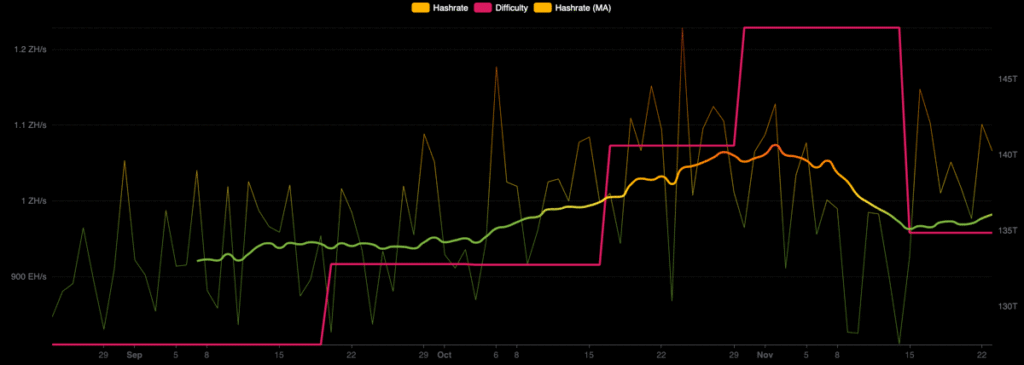
The gap in computing power helps explain the odds. A single Bitmain U3S23H Antminer delivers 1,160 TH/s. Across the network, Mempool estimated Bitcoin’s total hashrate at 1.07 zettahashes per second on Nov. 23, putting the solo miner’s share at about 0.000001%. Among public mining companies, Ziven put Bitdeer at 82.3 exahashes per second, MARA Holdings at 71.2 and Riot at 37.2 — roughly 7.4 million, 6.4 million and 3.4 million times the solo miner’s hashrate, respectively.
There have been other small-scale winners. In November 2025, a solo miner reporting just 6 TH/s found a block worth about $265,000 at the time. In April 2026, another CKpool solo miner earned roughly $210,000 for block 943,411. Kolivas estimated that miner’s odds at about 1 in 28,000 on any given day, rather than over a year. Other solo miners have found blocks using substantially more computing power, including rented hashrate.