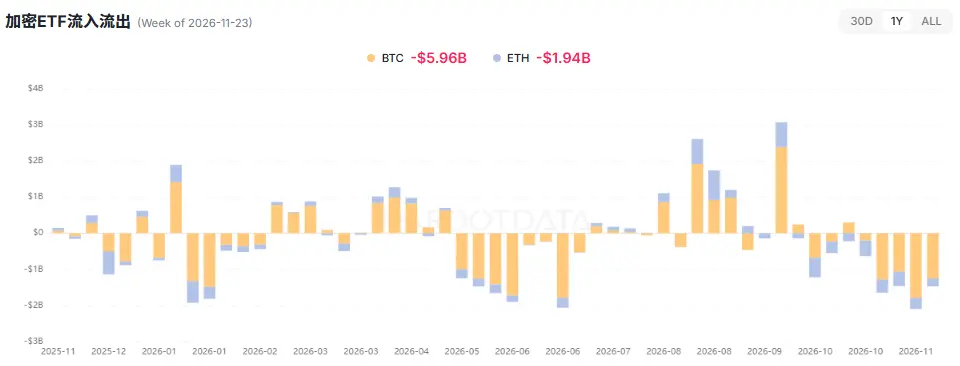
US spot Bitcoin exchange-traded funds had already set a monthly outflow record before November was over. In a report published on November 27, 2026, at 15:17:31 UTC+8, Zhou cited RootData figures showing $5.7 billion in net withdrawals through November 25, above June’s $4.51 billion record. Year-to-date net outflows stood at about $5.96 billion. Bitcoin had fallen below $60,000 again, reaching its lowest price since September 2024.
The flow figures showed how much money had left the funds, but not who had withdrawn it. Futures positions offered one clue; public filings showed the limits of what could be known.
What the filings reveal about sellers
By November 17, leveraged funds’ net short position in CME Bitcoin futures had fallen more than 90% from its December 2024 peak, according to the US Commodity Futures Trading Commission. Just 1,211 contracts remained, equivalent to roughly 6,000 bitcoin. That suggested traders who paired ETF holdings with short futures positions had largely unwound those trades, yet substantial ETF withdrawals continued. In 10x Research’s assessment, the pattern looked more like investors steadily reducing their Bitcoin allocations.
Investment advisers and wealth platforms were the largest group in third-quarter 13F filings, accounting for about 40.5% of reported holdings. But the filings covered only 27.6% of the bitcoin in the funds. Filings due in February 2027 would offer only a partial view of who sold.
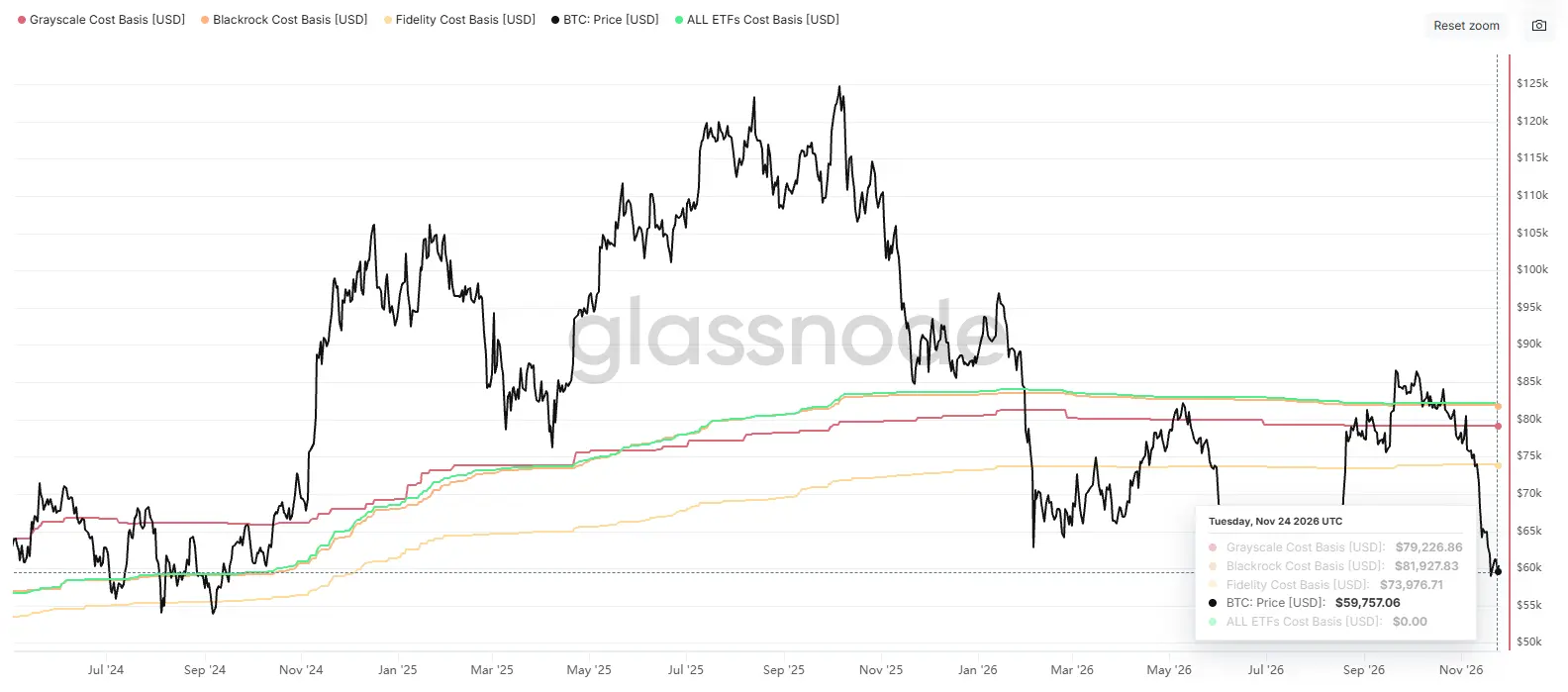
Many holders faced losses on paper. On November 24, when bitcoin traded at about $59,757, Glassnode estimated the average acquisition cost for holders of BlackRock’s IBIT at $81,928 per bitcoin. The corresponding figures were $79,227 for Grayscale and $73,977 for Fidelity. That put the average IBIT position roughly 27% below cost.
A custody debate, and a split from stocks
September brought the Federal Reserve’s first rate increase in three years and the first tightening cycle since US spot Bitcoin ETFs began trading nearly three years earlier. The Fed held rates at 3.75%–4% on October 28 without signaling a reversal. According to 10x Research, Bitcoin ETFs recorded net outflows on 14 of the next 17 trading days.
On the first trading day after the reported theft of approximately $6.3 billion from Binance, investors withdrew a net $640 million from spot Bitcoin ETFs, the largest daily outflow since late June. ViaBTC chief analyst Jeff Ko attributed the withdrawals mainly to sentiment: the funds’ bitcoin was held by regulated custodians, with no direct connection to Binance. OneKey’s Yishi raised a separate custody concern, noting that Coinbase held most of IBIT’s roughly 760,000 bitcoin and that its $320 million insurance coverage amounted to less than 1% of the fund’s holdings.
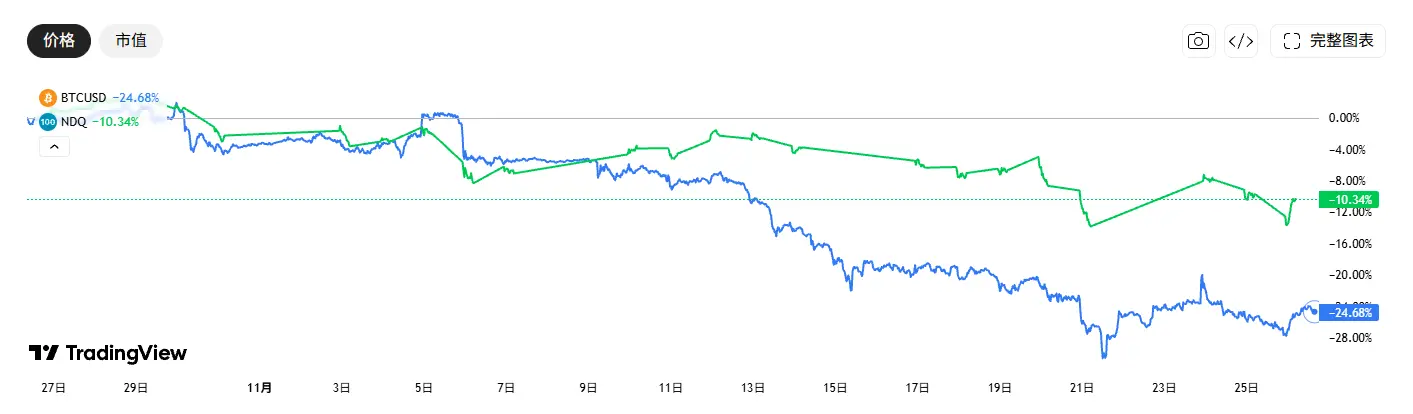
Bitcoin initially fell alongside stocks. On November 5, as AI shares sold off, the Nasdaq 100 dropped 6.36% and bitcoin fell about 5.5%. But their recoveries differed. After the November 10 inflation reading exceeded expectations, bitcoin fell again, while US stocks recovered above their election-day close, Glassnode noted. From October 28, bitcoin was down about 25%, against roughly 10% for the Nasdaq 100.
Zhou argued that interest rates and the AI sell-off explained only part of that gap, pointing also to exchange security, the regulatory outlook and weaker buying by Bitcoin treasury companies. After Democrats won both chambers in the November 3 midterms, CertiK’s Stefan Muehlbauer judged that the CLARITY bill was unlikely to pass in either the sitting Congress or the next. That was his assessment of the bill’s prospects, not a legislative outcome.
Unlike in November 2025, when newly listed SOL and XRP ETFs drew money as Bitcoin and Ether funds lost it, withdrawals were widespread. SOL ETFs’ 14-week inflow streak ended in October 2026. According to SoSoValue, 12 of 15 US spot crypto ETF categories recorded net withdrawals over 30 days, including $1.64 billion from Ether ETFs.
Familiar buyers stepped back
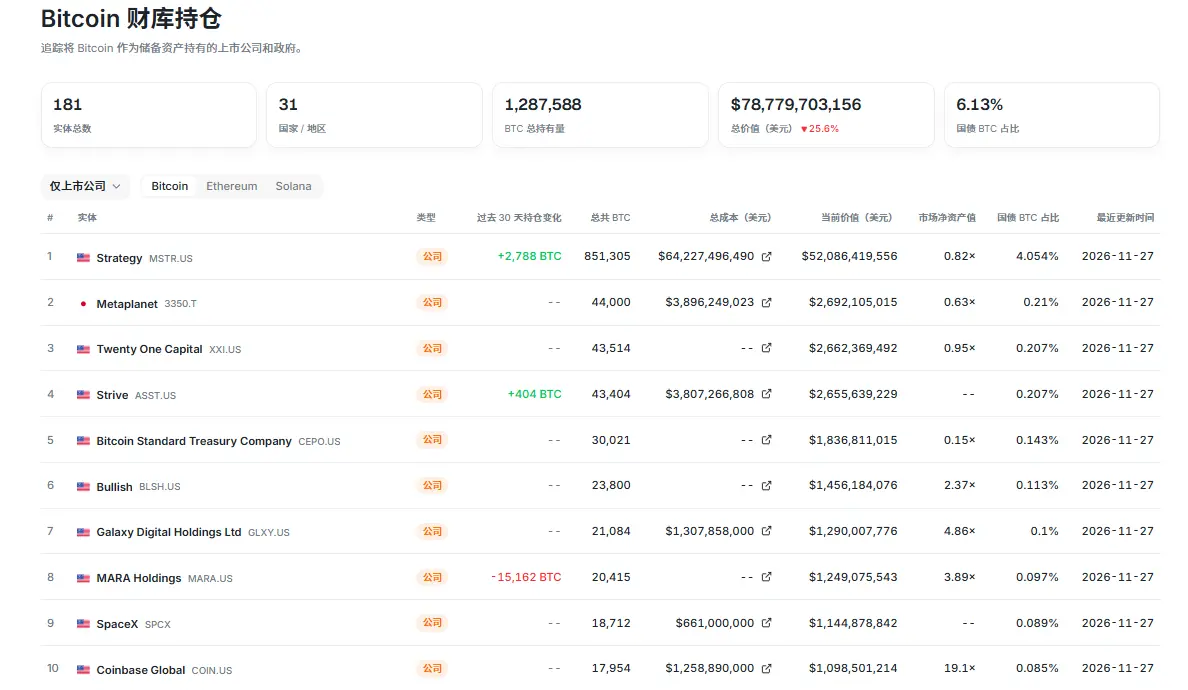
Strategy held 851,305 bitcoin at an average cost of about $75,000, leaving it with an unrealized loss of roughly 20%, according to RootData. Its market valuation stood at 0.83 times net asset value, and it had added just 2,788 bitcoin in 30 days. In late May it had sold 32 bitcoin to pay preferred-stock dividends, its first sale since December 2022.
MSCI announced Strategy’s index removal on November 11. The removals of Strategy, Metaplanet and Upexi were scheduled to take effect after the November 30 close. JPMorgan had estimated potential passive selling of about $2.8 billion. Strategy argued the impact would be limited because the affected funds owned only about 3.1% of its shares.
Bitcoin miner MARA told shareholders it had sold 13,597 bitcoin after the third quarter for approximately $1.1 billion and planned further sales to finance projects including AI infrastructure. Over a separate 30-day window, RootData recorded a decline of 15,162 bitcoin in MARA’s holdings.
Stablecoin supply was also shrinking: rwa.xyz put total market capitalization at $273.09 billion, down 5.58%, or about $16 billion, in 30 days. Coinkarma founder Benson Sun described his own decision in terms of flows rather than price. Although he considered long-term indicators favorable, he said he would wait for ETF net flows to turn positive before buying.
What past outflows could—and couldn’t—show
On 10x Research’s rolling 30-day measure, Bitcoin ETF outflows were about $4.6 billion, distinct from the $5.7 billion November-to-date figure. It was the fourth time since early 2025 that rolling withdrawals had reached $4 billion–$6 billion. Each of the previous three episodes coincided with a bitcoin decline of about $20,000, and peak outflows roughly aligned with local price lows. Three precedents were too few to establish a bottom.
The December Fed decision was still ahead. After the November 18 release of the Fed’s minutes, CME FedWatch put the probability of a December increase near 95%. A quarter-point rise was widely expected, but neither the decision nor the Fed’s guidance on rates in 2027 was settled.
Year-end tax decisions were another uncertainty. During Christmas week in 2025, Bitcoin ETFs recorded about $1.1 billion in outflows across six consecutive days. For 2026, 10x Research estimated that roughly $14 billion in ETF positions were trading below cost, leaving holders to decide by December 31 whether to realize losses. The distinction for holders was that wash-sale rules applied to ETF shares but not to directly held bitcoin. A tax-driven ETF sale therefore need not mean an exit from Bitcoin itself. A January return to the funds was a possibility, not an observed reversal.