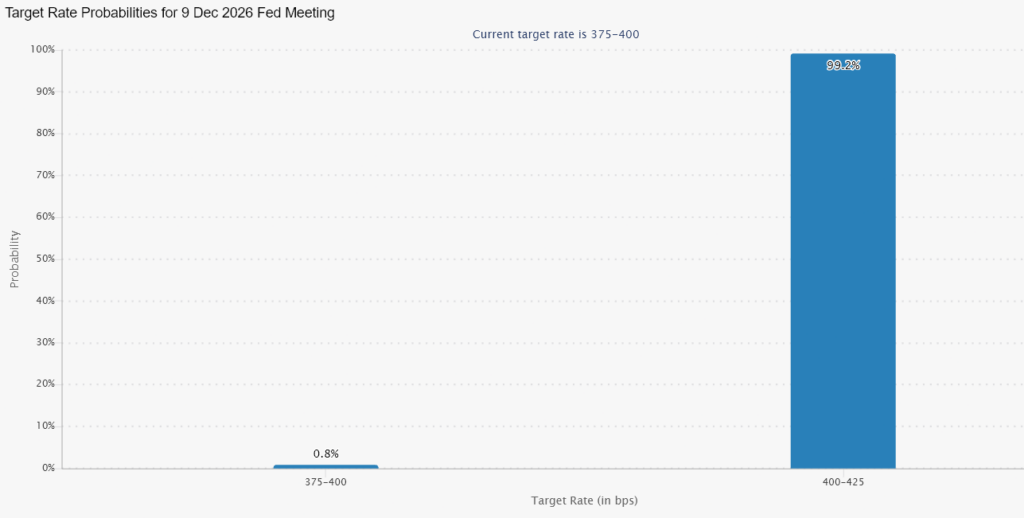
By November 28, 2026, financial markets expected three quarter-point US interest rate increases by June 2027, starting with a widely anticipated December hike. That would put rates at 4.50%–4.75%. Investors had entered 2026 expecting one or two cuts instead. BloFin Research said the shift could keep Bitcoin under pressure for another six months.
Why expectations reversed
Early in the year, easing services inflation and slower job growth supported the case for cheaper borrowing. The Middle East conflict in late February raised energy and transportation costs, threatening to push inflation higher. By late March, investors had largely stopped expecting cuts. Unemployment then held between 4.1% and 4.3% through the spring and summer, giving the Federal Reserve room to focus on inflation.
The Fed’s own projections changed across three meetings. These were forecasts for 2026, not rate decisions or recorded year-end outcomes:
| Fed projection for 2026 | March | June | September |
|---|---|---|---|
| PCE inflation | 2.7% | 3.6% | 3.7% |
| Core PCE inflation | 2.7% | 3.3% | 3.4% |
| Unemployment | 4.4% | 4.3% | 4.1% |
| Year-end interest rate | 3.4% | 3.8% | 4.1% |
Higher rates make borrowing more expensive and interest-bearing assets such as government bonds more attractive relative to Bitcoin. CoinGecko data showed Bitcoin fell nearly 30% after the October Fed meeting. Gold also declined sharply as investors revised their rate expectations in November.
Why fewer expected hikes could matter before a cut
The November 25 inflation report showed how annual and monthly figures could point in different directions. Annual core personal consumption expenditures (PCE) inflation reached 3.3%, above expectations. But the monthly increase slowed from 0.32% to 0.29%, and inflation-adjusted consumer spending was flat. Treasury yields fell, and Bitcoin recovered from its intraday lows.
That rebound did not establish a lasting recovery. The distinction for Bitcoin is between a rate cut and a change in what markets expect: if inflation eases enough for investors to anticipate fewer hikes, pressure could lift before the Fed actually cuts rates. Persistent inflation could prolong the downturn, while a severe slowdown would pose risks of its own.