
Bitcoin traded at 60,789.52 USDT at 9:14 a.m. Beijing time on November 27, 2026, down just 0.02% over 24 hours. Ether was also little changed at 1,702.06 USDT, down 0.15%. The broader crypto market recorded a larger decline: its total value stood at about $2.105 trillion at 9:12 a.m., down 2.32% over 24 hours.
The next scheduled event was Deribit’s monthly expiry of bitcoin and ether inverse options at 4 p.m. Beijing time, before US equities reopened for a shortened Black Friday session. Bitget’s morning market report put the contracts’ combined notional value at about $7.31 billion: $6.68 billion in bitcoin options and $630 million in ether options. Based on open positions that morning, the estimated “max pain” levels were $70,000 for bitcoin and $2,100 for ether. Both were above spot prices, but they described the distribution of outstanding positions, not where the contracts would settle.
US ETF outflows grew as Switzerland opened a new route to bitcoin
US spot bitcoin ETFs recorded $453 million in net outflows on November 25, up from $231.4 million on November 24. IBIT accounted for $329.7 million, roughly 73% of the November 25 total. The US holiday produced no new regular creation or redemption figures. Bitcoin’s November 27 price and the ETF flows therefore covered different periods: the price holding above 60,000 USDT did not establish that redemptions had eased.
In Switzerland, BBIT began trading on SIX on November 26 as the country’s first spot bitcoin ETF. Its US dollar and Swiss franc trading lines give investors a way to obtain physically backed bitcoin exposure through a securities account. The listing established access; subscription volumes and liquidity would show how much investors used it.

Crypto shares rose, while MARA’s power deal awaited closing
Strategy gained 3.11% and Coinbase rose 1.34% on November 25, even as the US bitcoin funds posted net outflows. Strategy had disclosed on November 23 that it held 851,305 BTC as of November 22, at an average cost of about $75,446 per bitcoin including fees. Bitget put bitcoin’s November 27 morning price about 19.51% below that cost basis. That comparison represented an unrealized decline, not a loss from a sale.
Bitcoin miner MARA Holdings expected to close its acquisition of Long Ridge Energy & Power on November 27 and complete a $185 million secured-note issue carrying an 8.75% coupon. The acquisition’s base price was about $1.5 billion and closing conditions still applied. Completion would give MARA more direct control over power assets, but also leave it with financing and integration costs.
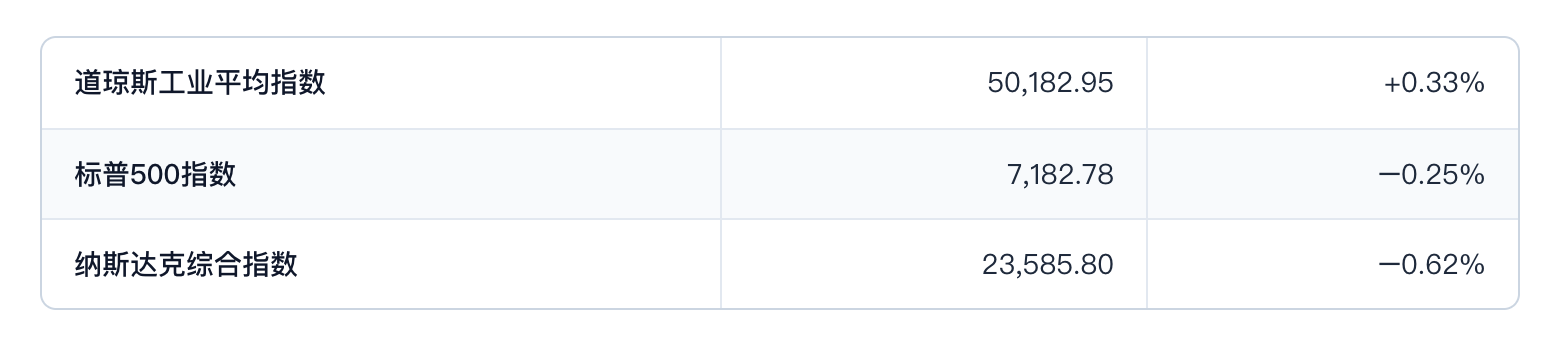
A half-day test for US technology shares
US stocks were scheduled to trade from 10:30 p.m. Beijing time on November 27 until 2 a.m. on November 28. In the final pre-holiday session, the Nasdaq recovered from an intraday decline of more than 4% to finish down 0.62%. The S&P 500 lost 0.25%, the Dow gained 0.33% and the VIX rose to 28.29. Bitget argued that a recovery extending across chipmakers and computing-infrastructure stocks would say more about demand for shares than gains in a few index heavyweights.
Two November 25 moves illustrated the distinction. Nvidia fell 3.91% to $149.30 after S&P Global Ratings placed its AA rating on negative watch over management and governance risks. That was not a downgrade or evidence of weaker server orders. Dell rose 0.60% to $297.06 after reporting $54.9 billion in fiscal third-quarter 2027 revenue, $60.2 billion in quarterly AI orders and a $132.3 billion AI order backlog. The orders documented demand; deliveries, margins and customer payments would determine how much cash they generated.
Oil added another uncertainty. January 2027 Brent settled at $96.57 a barrel on November 26. Iranian authorities said two tankers had struck mines in the Strait of Hormuz, following reports of an attack on a Saudi refinery. Those reports did not establish the scale of any lost production or blocked exports. Ahead of the November 29 OPEC+ ministerial meeting, actual loadings and shipping costs remained important measures of supply alongside production targets.

Two US regulatory developments with different effects
On November 25, Senators Elizabeth Warren and Chris Van Hollen made public a letter asking the Securities and Exchange Commission to withdraw a proposed crypto-asset rule and rescind an exemption order covering certain tokenized-securities platforms and liquidity providers. The letter did not itself change the rules or revoke the exemption.
Separately, November 23 guidance from Commodity Futures Trading Commission staff explained when certain regulated trading and clearing institutions could count bitcoin, ether or payment stablecoins toward specific financial-resource requirements. Eligibility depended on the institution and the requirement. The assets remained subject to risk-based valuation discounts and liquidity limits.